

How Much Money to Bring to Punta Cana in 2026 – Cash, Tipping, ATMs, & Scams to Avoid
How Much Money to Bring to Punta Cana
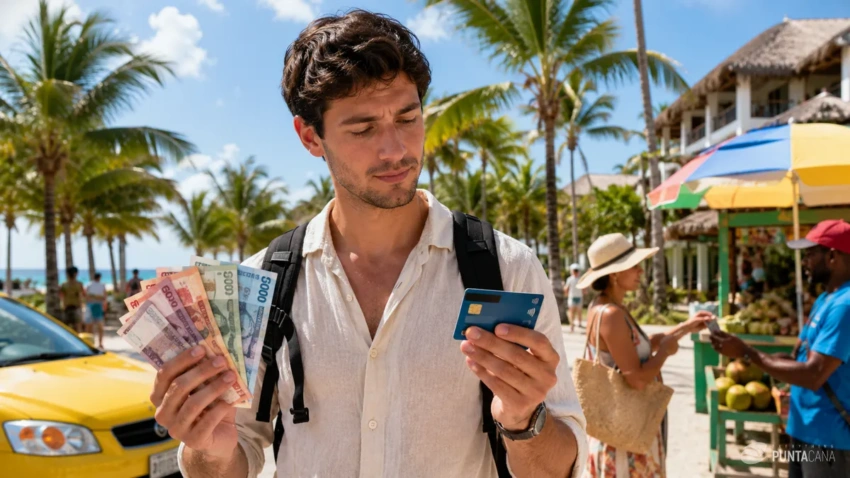
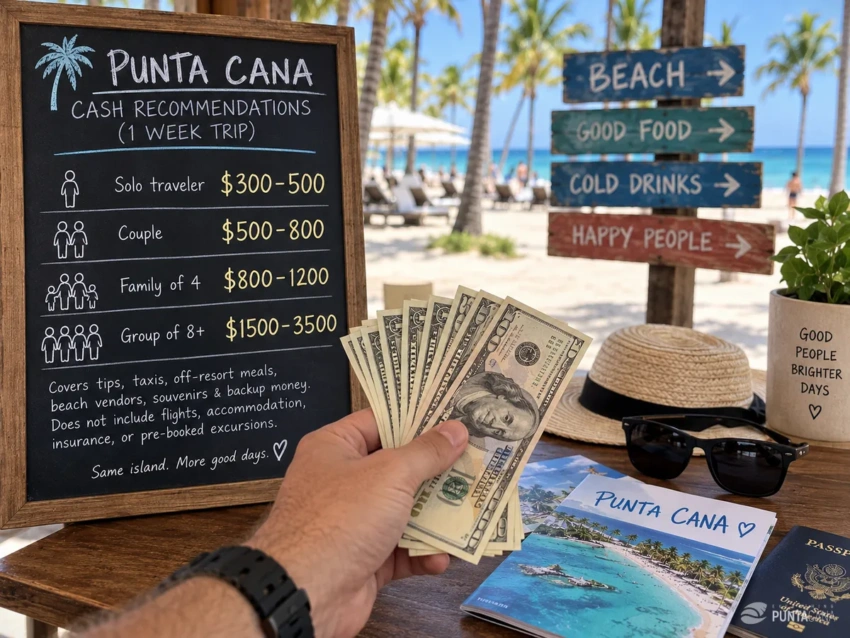
Long story short, these are our average cash recommendations for a one-week trip to Punta Cana, assuming you’ll also have a credit or debit card for larger expenses:
- Solo traveler: $300-500
- Couple: $500-800
- Family of 4: $800-1200
- Group of 8+: $1500-3500
This cash mainly covers tips, taxis, beach vendors, off-resort meals, small souvenirs, and backup money. It does not include flights, accommodation, insurance, or pre-booked excursions, which most travelers put on a card before the trip.
How much you actually need depends on your travel style. All-inclusive guests may spend almost nothing past tipping. Hotel guests pay as they go for every meal. Villa groups pool cash for staff gratuities and grocery runs, but split costs among more people.
Should I Take Cash or a Card to Punta Cana?
Should I Take Cash or a Card
Most major expenses can be charged to a card or paid before you arrive. Cash is for tips, taxis, beach vendors, comedores (small local restaurants), and many popular places that simply don’t take foreign cards.
The Cash vs. Card Framework
| Cash Only | Card Only | Either Works |
|---|---|---|
| Tips for staff | All-inclusive resorts | Mid-range restaurants |
| Comedores (small local eateries) and street food | Car rentals | Pharmacies |
| Local taxis, especially when negotiating | Pre-booked excursions | Souvenirs at malls |
| Beach vendors | Hotel deposits | Major supermarkets |
| Small markets | Gas stations | Tour operators |
How Much to Tip in Punta Cana?

How Much to Tip in Punta Cana
Tipping in Punta Cana can feel a little confusing at first. Some guests tip often, others only tip when the service is really good, and a few don’t tip at all. Even though most resorts are all-inclusive, staff still appreciate tips because wages are low and they can make a real difference for them and their families.
- A simple way to do it is to bring small bills, like $1 and $5.
- For drinks at the bar or pool, most people leave $1-2 per drink.
- At sit-down dinners, $5-10 is common, and some people leave more ($15-20) when the service is excellent.
- For housekeeping, leaving $2-5 per day in the room is a kind gesture.
- Many travelers also like to give a bigger tip ($20 or so) to someone special at the end of the trip.
- Bellhops and porters: $1-2 per bag
- Airport and private transfers: $5-10 per trip
- Tour guides: $5-10 for half-day, $10-20 for full-day
- End-of-trip thank-you: $20 or so for a favorite bartender, server, or anyone who made the week better
You’re not expected to tip everyone, every time. But a small tip after the first round of drinks usually means warmer, faster service for the rest of the stay – staff remember kindness. A polite “gracias” and basic respect matter as much as the money.
Daily Expenses in Punta Cana: Food, Transport,
Excursions and Nightlife
Daily Expenses in Punta Cana
Beyond accommodation, your daily spending in Punta Cana comes down to three things: how you eat, how you get around, and how you book activities. Some of it goes on a card; some of it is easier or only possible in cash.
How much do you spend on food?
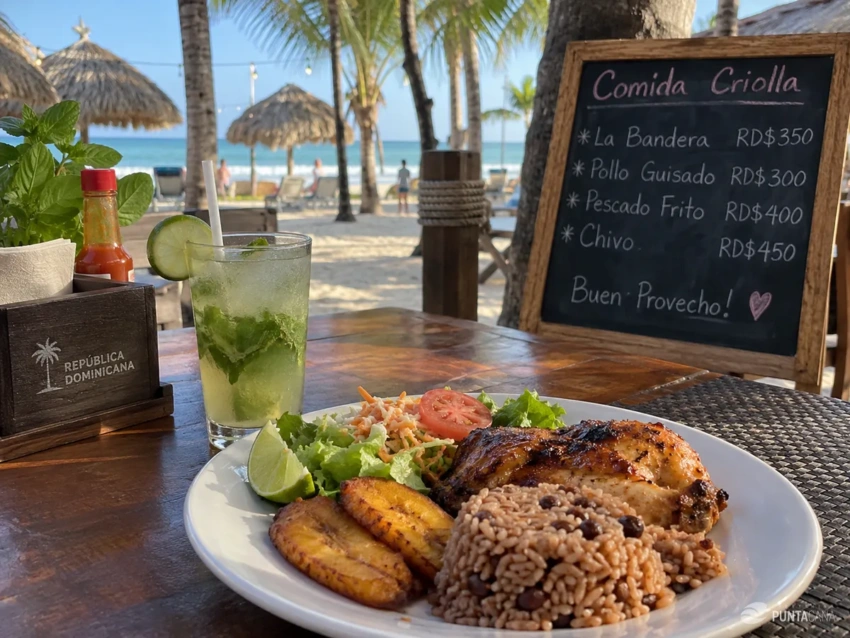
Food costs in Punta Cana vary widely depending on where you eat. Local comedores usually run $5-10 per person and serve simple Dominican meals like rice, beans, chicken, plantains, and stews. Casual and mid-range restaurants are usually $10-30 per person, covering most beachfront and tourist-area spots. Fine-dining restaurants and beach clubs often start at $30-60+ per person and may require a reservation.
Comedores work best with Dominican pesos in hand. Larger restaurants usually accept cards, but keep cash ready for tips, small purchases, or the occasional unreliable card terminal.
Menu prices may not include the full final bill. Restaurants in the Dominican Republic often add 18% ITBIS tax and a 10% service charge, so factor that in when looking at menu prices. Even when the 10% service charge is included, many travelers leave an extra 5-10% in cash directly for the server if the service was good.
What is the cheapest way to get around Punta Cana?
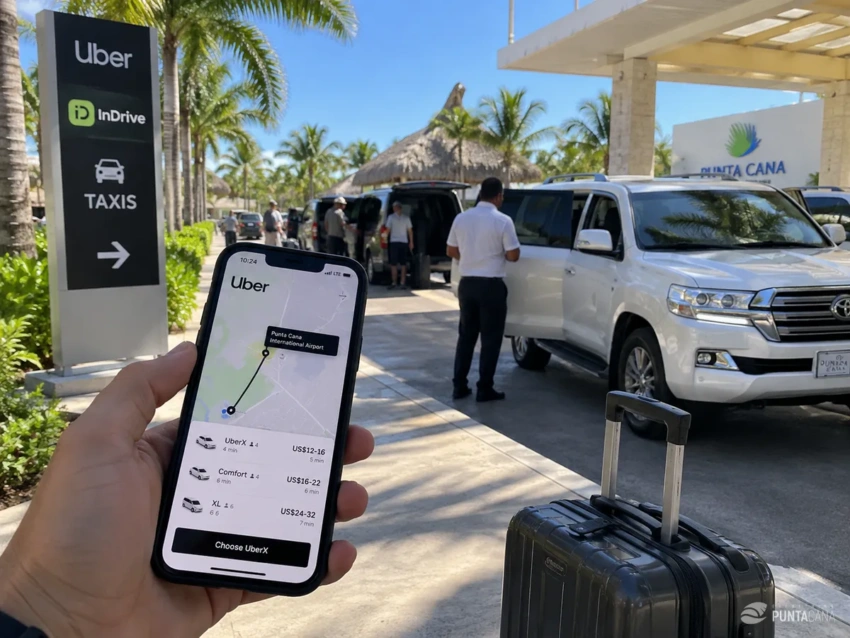
For solo travelers and short hops, Uber or InDrive are usually the cheapest, most reliable option. For families and villa groups, splitting a private transfer or minivan beats almost everything else per person.
The cheapest way to get around Punta Cana
Taxis are common, but prices are often negotiable. As a rough baseline, you can use about $0.36 per kilometer when estimating local rides, but tourist-area pricing may be higher. Please confirm the final price for the entire group, not per person, before the ride starts.
Uber is available in Punta Cana, but it can be restricted at resort gates and around the airport. In some cases, you may need to walk to a main road or choose a pre-booked transfer instead. InDrive is also used locally; it works more like a name-your-price ride app, where you suggest a fare and drivers can accept or counter.
Local minibuses do exist, but they are usually more hassle than they are worth for tourists. Routes are not always obvious, luggage is inconvenient, and they are not a good fit for families, groups, airport arrivals, or anyone on a tight schedule.
Rental cars usually run around $30-60 per day and can work for independent travelers, but local traffic, parking, and unfamiliar roads can make driving stressful. Liability insurance is essential; check whether your credit card covers it in the Dominican Republic, or prepare to pay for a local policy.
-
Toyota Vitz Rent a car in Punt Cana
from $59 View Details -
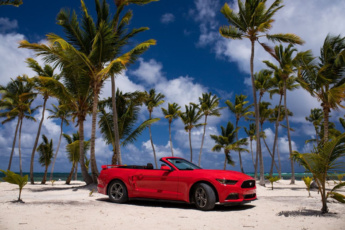
Ford Mustang Convertible Car Rentals in Punta Cana
from $180 View Details -

Kia Optima Cheap car rentals in Punta Cana
from $75 View Details -
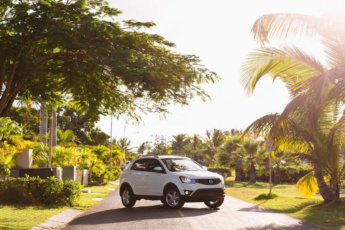
SsangYong Tivoli Hire a car in Punta Cana
from $85 View Details -

Chevrolet Camaro Convertible Luxury car rental in Punta Cana
from $120 View Details
Transportation Expenses
| Transport Option | Typical Cost | Best For | Cash or Card? |
|---|---|---|---|
| Taxi | Negotiable; confirm first | Short rides, flexible plans | Mostly cash |
| Uber/InDrive | Often cheaper than taxis | Short city rides, non-airport trips | App payment or cash, depending on setup |
| Rental car | $30-60/day | Independent travelers | Card for rental, cash for parking/tips |
| Private transfer/minivan | Varies by route and group size | Families, villa groups, airport transfers | Usually pre-paid or cash tip |
Beach and water activities in Punta Cana
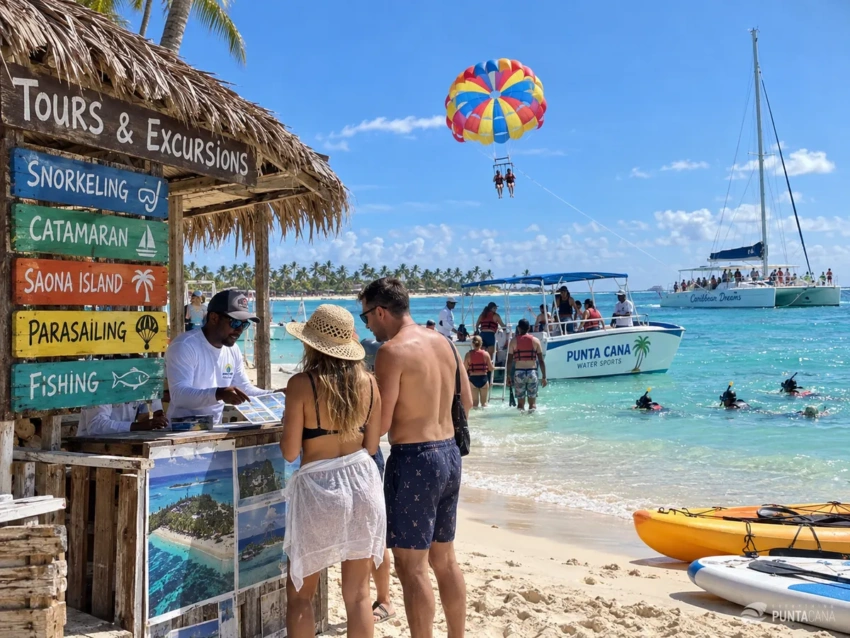
Beach and water activities in Punta Cana
Punta Cana is famous for its beaches and clear Caribbean waters, so beach and water activities are usually a major part of the trip budget. The most common options are snorkeling, parasailing, and catamaran cruises.
- Snorkeling costs from $50 per person, depending on location and length.
- Catalina Island is one of the best spots, with day trips from $85.
- Parasailing costs from $50 for a 10-minute flight.
- Catamaran cruises start around $60-70 per person and usually include drinks and snacks.
For these smaller activities, book through your villa manager or directly with operators on the beach. Prices are typically 30-40% lower than those charged by hotel tour desks. Most beach vendors are cash-only.
-

Bávaro Adventure Park Sacred River – Combo Tour with Blue Cenote Lagoon, Jungle River, Dominican Village & Waterfall Pool
from $99 View Details -
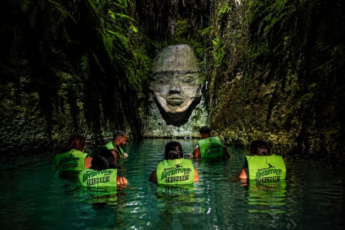
Sacred River Night Tour at Bávaro Adventure Park – Surf & Turf Dinner, and Jungle Party
from $169 View Details -
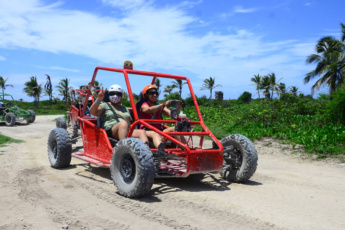
Catamaran & Buggy Ride Tour + Extra Activity of Your Choice – Bávaro Adventure Park Triple Combo
from $179 View Details -

Bávaro Adventure Park Best Combo Tour 2026 – Catamaran, Polaris, Blue Lagoon, Dominican Village & Bonus Activity
from $209 View Details -

Private VIP Catamaran Tour in Punta Cana – New Excursion with Open Bar, Snorkelling, Animation
from $1935 View Details -

Scenic Horseback Riding Experience at Bávaro Adventure Park, Punta Cana
from $99 View Details
Excursions and tours
- Saona Island is the most popular full-day trip – group tours run $75-150 per person, depending on boat type and pickup logistics. Private charters start around $700.
- Catalina Island day trips start at $85; private speedboat options begin at $700.
- Scape Park (Cap Cana) is $129 for full admission and includes ziplines, the Hoyo Azul cenote, cave exploration, and Taíno cultural sites. Standalone ziplining tours elsewhere run $90-120 per person.
- Group tip for 8+ people: ask about a private tour. The per-person cost is often nearly identical to a crowded shared tour, but you get a custom schedule, a private boat or guide, and far less waiting.
-
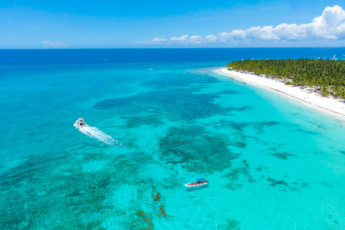
Private Isla Saona VIP Tour – Full-Day, Blue Lagoon, Snorkeling, Mangrove Forests
from $820 View Details -
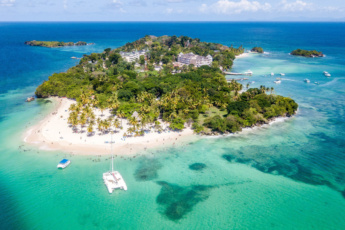
Cayo Levantado (Bacardi Island) and El Limon Waterfall Tour – Samana’s Best 2-in-1 Tour 2026
from $150 View Details -
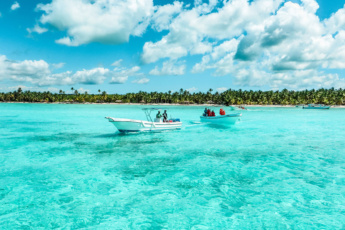
Isla Saona Boat Tour – Toro Beach, Mano Juan & Natural Pools
from $129 View Details -

Fantastic Private Boat Tour (from Cap Cana) – With Fishing & Snorkeling
from $1795 View Details -
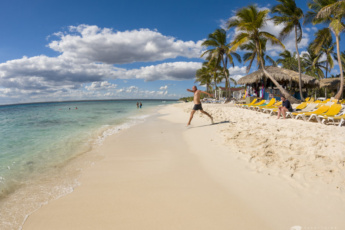
Private Catalina Island Full-Day Tour by Speedboat – Snorkeling, Personal Guide
from $860 View Details -
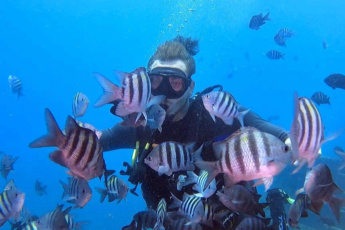
Scuba Diving Tour from Punta Cana – Catalina Island Dive & Snorkeling Trip with Buffet & Open Bar
from $230 View Details
Punta Cana nightlife and entertainment
Nightlife covers clubs, beach bars, casinos, and live-music spots. Club entry runs $10-50, beach-bar drinks $5-10, and casinos are usually free to enter – but set a hard cash limit before you walk in. Bars and clubs accept cards, but cash still rules for cover charges, tips, and taxis.
A note on Coco Bongo – it’s the most famous show in town, please check the current status and recent reviews before building a night around it.
-

Coco Bongo Show & Disco Punta Cana – Night Club Party 2026 (No Dress Code!)
from $90 View Details -

Night ATV Polaris Riding in Punta Cana + Jungle Party, Turf Dinner, and Open Bar at Bávaro Adventure Park
from $169 View Details -

Punta Cana Night Club with Best Prices – Maroca Club VIP Entry (Open Bar)
from $75 View Details -

Party Bus Punta Cana Night Tour – Enjoy the vibrant nightlife of the Dominican Republic
from $129 View Details -

Imagine Night Club in Punta Cana: Open Bar
from $129 View Details -

«Imagine» Night Club in Punta Cana: Premium Access
from $159 View Details
How much to budget for souvenirs in Punta Cana
Plan to set aside roughly $50-100 per person for souvenirs if you’re picking up small gifts, such as magnets, decorative plates, cocoa, coffee, coconut oil, or small larimar pieces. Budget souvenirs start at $1-5, a 450g bag of Dominican coffee runs $8-10, cocoa is around $5, and larimar jewelry set in silver starts at $10.
How Much Cash Do You Need in Punta Cana
by Accommodation Type
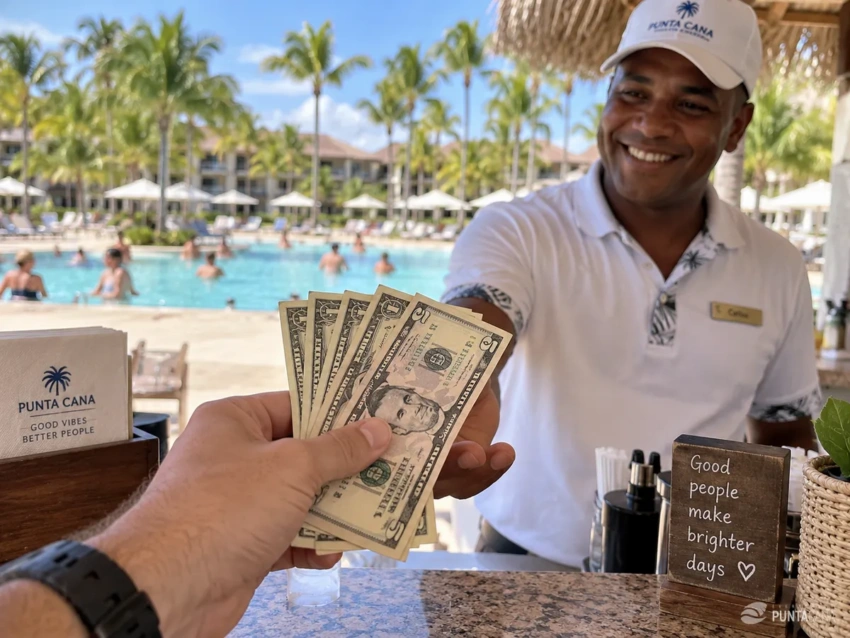
How Much Cash Do You Need Depending on Where You Stay?
A week at an all-inclusive resort and a week in a private villa look almost identical on paper – but the daily cash math is completely different. Some accommodation types front-load nearly every expense onto your card before you arrive.
Others leave you paying as you go, in cash, at every meal and taxi ride. Match the right number to your stay style and you won’t over-pack your wallet – or run short on day three.
All-inclusive resorts in Punta Cana – lowest daily cash needs
Meals and drinks are already covered, so the main cash expense is tips: $10-15 per day. Add the occasional excursion, premium liquor, or souvenir, and you’ll need roughly $30-50 per person per day ($210-350 per week). Please bring small US bills ($1s and $5s); staff prefer them over pesos.
Standard Punta Cana hotels – pay-as-you-go reality
Food alone runs $40-80 per person per day, depending on whether you stick to local comedores or hit beach clubs. Add taxis, drinks, and tips (10% at restaurants if not on the bill), and most hotel guests spend $80-120 per person per day ($560-840 per week). Solo travelers and couples should plan toward the upper end, since there’s no group to split costs with.
Punta Cana Villa Rentals – lower daily cash, higher setup
Villas work differently. Even though they sound expensive, the daily cash you actually need is often lower than at a standard hotel – especially for groups. That’s because the big costs (the villa itself, chef, maid service, airport transfers) are charged to your card before you arrive.
Once you’re there, you only pay cash for groceries (~$30-50/day for the whole group), staff tips ($5-10/day per person, given at the end of the stay), and any restaurants or excursions you add on.
For a group of 6 or more, daily cash needs typically land at $40-70 per person, or roughly $280-490 per person for the week. The shared math: a $40 grocery run feeds 10 people, a $50 transfer is split eight ways, and you’re not paying $12 every time someone wants a cocktail.
-

Luxury All Inclusive Villa Waterfall in Punta Cana (Bávaro, Cocotal) – Private Pool, BBQ, Maid, Chef & Meal Plans
from $985 / night View Details -

Villa Désirée – Luxury Golf Villa in Punta Cana’s Prestigious Cocotal Golf & Country Club – Huge Private Pool & BBQ Area, Kids’ Playground
from $800 / night View Details -

Villa May – New Modern Beachfront 8BR Villa with Pool & Maid in Bavaro, Los Corales
from $974 / night View Details -

Spacious 4-BR Punta Cana Golf Villa in Cocotal – Private Pool, Jacuzzi & Basketball Hoop for Family Fun
from $525 / night View Details -

Exclusive Ocean View 5-Star Cap Cana Villa for Rent – Chef, Butler, Maid & Golf Cart
from $3240 / night View Details -

Two Luxury Villas in Cocotal for Large Groups – With Jacuzzi, Pools, Gym
from $2995 / night View Details
Quick example – group of 10, one week, villa with chef:
- Groceries: ~$300 total ($30/person)
- Staff tips: ~$400 total ($40/person)
- Two private excursions: ~$1,000 split ($100/person)
- Restaurants and incidentals: ~$300/person
- Per-person cash total: $470, or about $65/day
A villa is probably not the right pick if you’re traveling solo or as a couple, staying only 2-3 nights, or want 24/7 front-desk service and a full resort schedule of organized activities.
Daily cash needs by accommodation type
| Type | Daily Cash Need | Weekly Cash Need | Best For |
|---|---|---|---|
| All-inclusive resort | $30-50 per person | $210-350 per person | Lowest daily cash needs, easy budgeting |
| Standard hotel | $40-60 per person | $280-420 per person | Travelers eating out and exploring |
| Private villa | $55-80 per person for groups | $380-560 per person / $2,500-5,000 total for 8-10 guests | Families, groups, private chef, shared logistics |
-

Condo for Rent in Punta Cana – Stunning Ocean View – Oreuga
from $455 / night View Details -
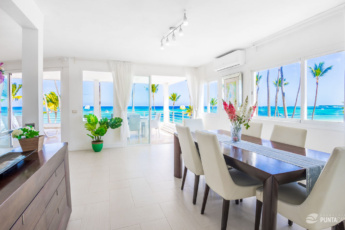
Beachfront Punta Cana Condo for Rent – Private Apartment with Stunning Oceanview, Bávaro, Los Corales
from $165 / night View Details -

Dream Apartments for Rent in Punta Cana – Oreuga Ocean View Paradise
from $219 / night View Details -

Iberostate 2BR Condo in Bávaro, Punta Cana – Pools, Gym, Iberostar Golf Club & Private Beach Club
from $105 / night View Details -

Spacious 3BR Condo in a Quiet Secure Cap Cana Residence – Private Pool, Large Terrace, Prime Marina Location
from $440 / night View Details -
Amazing Lakeview 4BR Apartment in Secure Cocotal Community, Punta Cana
from $110 / night View Details
Is Punta Cana Safe?
Cash, ATMs, and Common Scams
Cash and ATMs
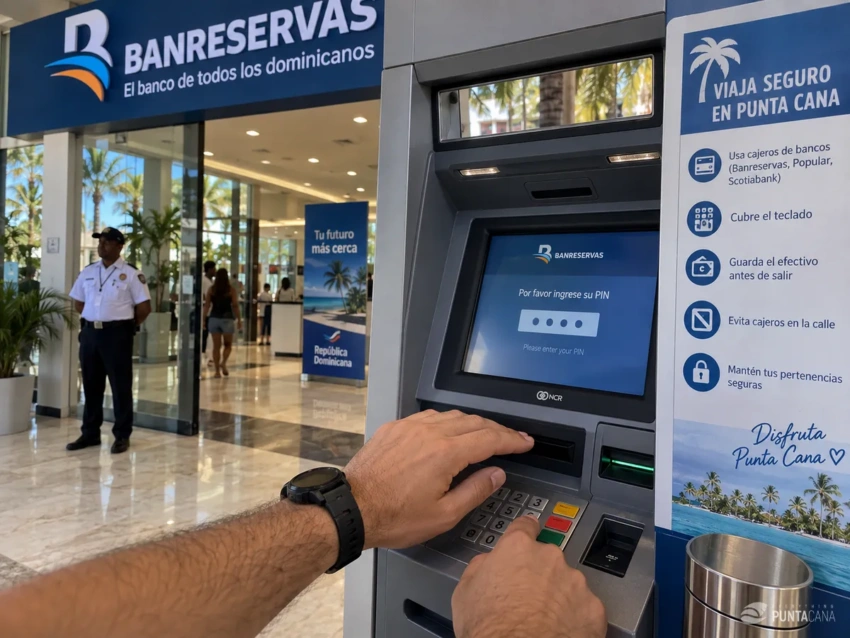
Punta Cana is generally safe for tourists, but cash discipline matters. The basic rule is never to carry your full trip budget on you. Keep the bulk in your villa or hotel safe and take out only what you need for the day’s excursions, tips, transport, and small purchases.
- Use bank ATMs, not street machines. Banreservas, Popular, and Scotiabank are the safest – ideally in a bank lobby or a shopping mall during the day. Cover the keypad and put the cash away before stepping outside.
- Stick to $1s, $5s, $10s, and $20s – some resorts and small businesses won’t break $50s or $100s
- Keep small bills for taxis. Drivers will often claim “no change” for $50 or $100 – a classic way to round up the fare. Pay with what’s close to the agreed price.
- Don’t pull out a full wallet in public. Count and separate what you need before you leave, especially at beach bars, clubs, and crowded markets.
- Skip the airport “helpers” for currency exchange. Use official exchanges or your bank ATM on arrival.
- For groups, split daily cash across two or three people when you’re out – losing one wallet shouldn’t sink the trip. The shared pool for villa expenses (groceries, staff tips, group excursions) is a separate matter – keep that in the villa safe with one designated person managing it.
- Gated communities and resort grounds reduce the risk of street-level incidents. Keep digital photos of your passport and main bank card on your phone, and leave a backup card in the safe, along with an emergency cash reserve.
| Scenario | Trip setup | Recommended cash to bring | What this cash is mainly for |
|---|---|---|---|
| A. Couple, 5 days, mid-range hotel | Accommodation paid by card | $400-600 for the couple | Tips, taxis, beach activities, small restaurants, souvenirs |
| B. Family of 4, 7 days, all-inclusive resort | Accommodation and meals already paid | $800-1,200 for the family | Mostly tips, excursions, souvenirs, small extras |
| C. Group of 8 friends, 7 days, villa with chef | Villa paid by card | $1,600-2,400 for the group $200-300 per person |
Groceries, staff tips, excursions, restaurants, local transport |
| D. Group of 14, 5 days, beachfront villa | Villa paid by card | $2,800-3,500 for the group $200-250 per person |
Groceries, villa staff tips, beach activities, excursions, restaurants |
Currency in Punta Cana –
Dominican Peso vs. US Dollar
Currency in Punta Cana
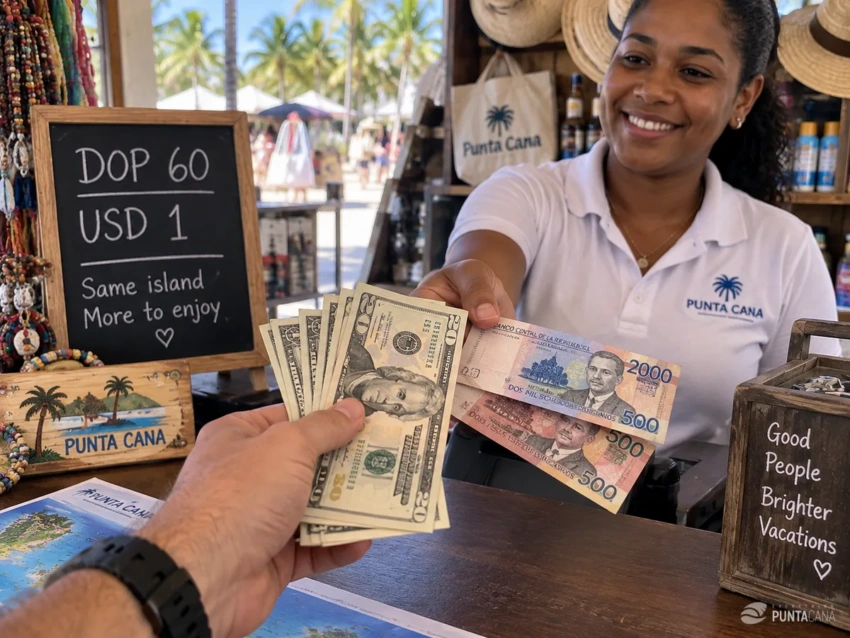
The official currency is the Dominican peso (DOP / RD$), but US dollars are accepted across all tourist areas. Resorts, villas, tour companies, and private drivers usually quote prices in USD.
- USD is the easier choice for tours, airport transfers, private chefs, villa services, resort extras, and tipping. If a price is already listed in dollars, paying in USD is straightforward.
- Pesos work better at local shops, supermarkets, casual restaurants, and markets. Vendors often apply a less favorable exchange rate when you pay in dollars at these places, so paying in pesos saves you a few dollars over the course of a week.
Currency converter to Dominican Peso
Exchange rates for the Dominican Peso
If you’re flying in from Canada, don’t count on Canadian dollars for daily spending. Some resorts and exchange offices accept CAD, but most local vendors don’t – and when they do, the rate is usually worse than paying in USD or pesos. Bring U.S. cash or rely on a card with no foreign transaction fees instead.
Where to exchange money in Punta Cana
| Exchange Option | Typical Rate | Convenience | Best For |
|---|---|---|---|
| Banks | Usually competitive | Medium | Larger exchanges, best rates |
| Official exchange offices | Usually competitive | Medium | Everyday exchanges, fast service |
| Hotels and resorts | Less favorable | High | Small, urgent exchanges |
| Airport exchange desks | Usually the weakest | High | Cash right after arrival |
| Villa manager or concierge | Often practical | High | Guests staying in private villas |
Best rules for exchanging cash in Punta Cana
- Never exchange money at your departure airport or the arrival airport in Punta Cana unless it’s an absolute emergency. These kiosks have the highest markups and the lowest rates.
- If you arrive with mostly $20s and $100s and need ones for tipping, ask a bellhop or front-desk attendant to break a bill. They almost always have small change and are happy to help – leaving them a small tip in the process.
- Skip the street money changers. Even if the rate sounds better, it’s not worth the risk.
- If you’re staying in a private villa, ask the villa manager about exchange options. They usually know a trusted exchange office or can arrange a fair rate without sending you to the airport or hotel desk.
Credit Cards and ATMs in Punta Cana
Credit Cards and ATMs in Punta Cana
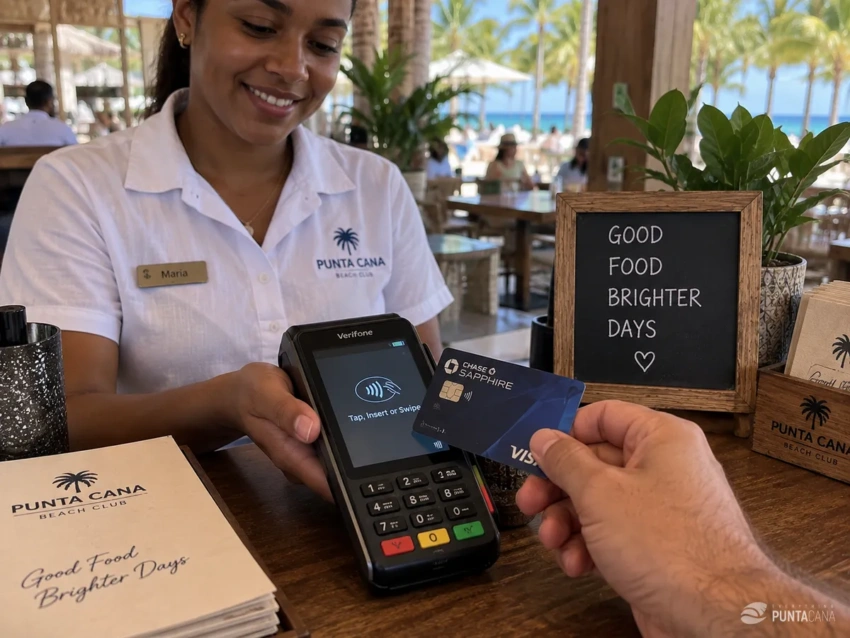
Credit cards are widely accepted in Punta Cana – at resorts, larger restaurants, beach clubs, supermarkets, and established tour companies. Visa and Mastercard are the most reliable. American Express works in some places, but it is less common.
Before you travel, check whether your card charges a foreign transaction fee. Most cards add 2-3% on purchases outside the U.S. or Canada. If you travel often, it’s worth getting a card with no foreign transaction fees. It usually pays for itself on the first trip.
Many travel rewards cards already waive these fees. It’s worth a quick check on your Chase, Capital One, Amex, Aeroplan, or Scotiabank Passport card if you’re flying from Canada.
Watch out for Dynamic Currency Conversion (DCC). When you use your card at an ATM or store, the terminal may ask: “Would you like to be charged in USD instead of DOP?” Always decline the conversion and choose to pay in Dominican pesos. The local terminal’s ‘convenience’ rate is usually 5-10% worse than your bank’s standard rate.
If you’re staying in a gated villa community, this part is simpler. Controlled access and on-site staff mean that using an ATM or paying by card feels safer than using a public terminal.
Should you exchange money before you fly?
You do not need Dominican pesos upon arrival. USD covers your first hours, and you’ll get better rates exchanging in town than at the airport.
Emergency Funds and Unexpected Costs in Punta Cana
Cash, Cards, and Insurance
Emergency Funds and Unexpected Costs
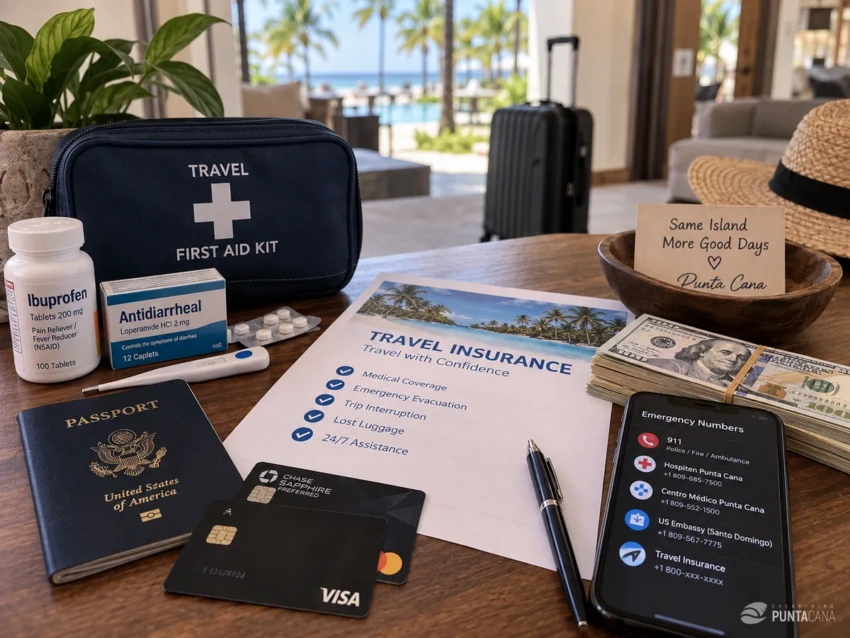
Even with a fully prepaid villa, hotel, or resort package, set aside a separate emergency fund of $200-300 per person, in addition to your regular cash budget. This isn’t vacation money – it’s there for the things you hope won’t happen: an urgent doctor visit, a last-minute change of plans, a lost wallet, or a delayed flight that turns into an extra hotel night.
The bigger issue is medical care. Hospitals and clinics in the Dominican Republic require payment up front for services and will place holds on credit cards when a patient is admitted – even in emergencies. According to the U.S. Embassy in the Dominican Republic, a medical evacuation to the United States can cost well over $50,000, and uninsured travelers often face serious financial and logistical challenges. Travel insurance isn’t optional here; it’s the single most important thing you can buy before the trip.
| Emergency type | Typical possible cost | Why it matters |
|---|---|---|
| Doctor or clinic visit | $50-150+ | Stomach issues, fever, allergies, ear infections, minor cuts – common stuff that pops up mid-trip |
| Medication | $20-100+ | Pharmacies usually want cash or card on the spot; insurance reimburses you later |
| Hospital visit | $300-1,000+ | Costs climb fast with tests, IV fluids, or an overnight stay |
| Medical evacuation to the U.S. | $50,000+ | Rarely included in basic health insurance – this is what dedicated travel/evacuation policies are for |
What to do if you lose your passport or wallet in Punta Cana
Before you leave home, save digital copies of your passport, driver’s license, travel insurance card, flight confirmations, and accommodation booking to both your phone and cloud storage you can reach from any device. If your phone is the thing you lose, you’ll still have access from a hotel computer or a friend’s device.
- If your passport goes missing, contact your country’s nearest embassy or consulate (for U.S. citizens, that’s the Embassy in Santo Domingo). You’ll need a local police report, a copy of your ID, your travel itinerary, and proof of citizenship to get an emergency replacement – which is exactly why those digital backups matter. File the police report as soon as possible; many embassies and insurance providers require one before they’ll act.
- For a lost or stolen wallet, freeze your cards through your bank’s app immediately, then call to report the loss. Most major banks can wire emergency cash to a Western Union or MoneyGram location in Punta Cana within 24 hours if you’re left without funds.
Conclusion
The right amount of cash for Punta Cana isn’t a single number – it’s a function of how your trip is structured. A solo traveler at an all-inclusive and a group of ten in a villa can both be “right” with completely different wallets. What matters is matching cash to the moments where cards don’t reach: the housekeeper at the end of the week, the beach vendor with a hammock you’ll actually want, the taxi back from a comedor at 11 p.m.
Pack small denominations, keep a card with no foreign transaction fees for the bigger stuff, and don’t skip the travel insurance. Leave the bulk of your cash in the safe and carry only what the day needs. Do that, and the money side of the trip handles itself – which is the whole point.
Updated on: . Author: