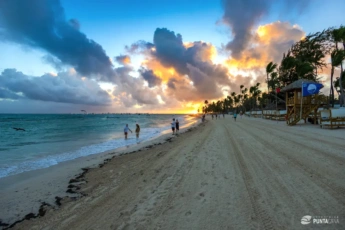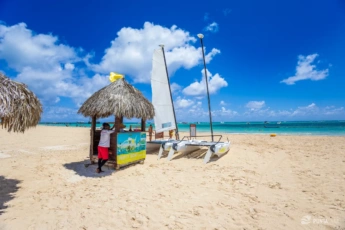


How to Not Get Sick in Punta Cana – Practical Tips for Tourists 2026
If you are planning a trip to the Dominican Republic, you are likely wondering exactly how to avoid getting sick in Punta Cana. It’s one of the most popular tourist destinations in the Caribbean, drawing millions of people with its white-sand beaches and all-inclusive resorts. In 2025, the country welcomed more than 11.7 million visitors. By July 2026, it had already welcomed 7.7 million visitors, with Punta Cana receiving 58% of the country’s arriving flights that month.
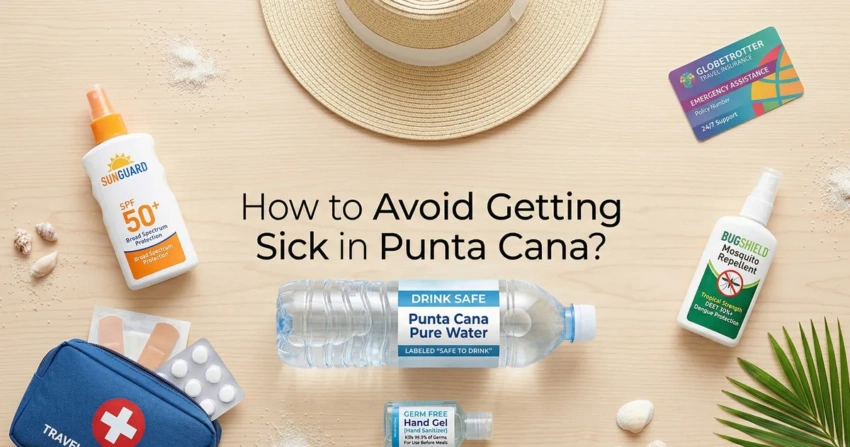
Your essential checklist for a safe and healthy vacation in the Dominican Republic
But the tropical climate and local environment hide some health risks. If you want a truly safe vacation, simple advice from travel forums won’t cut it. In this article, we’ve translated complex medical reports into plain English so you can enjoy a safe and healthy trip.
1. The First Step in How to Avoid Getting Sick in Punta Cana
Vacation prep should start early – ideally, consult a travel clinic or your doctor at least a month before your flight.
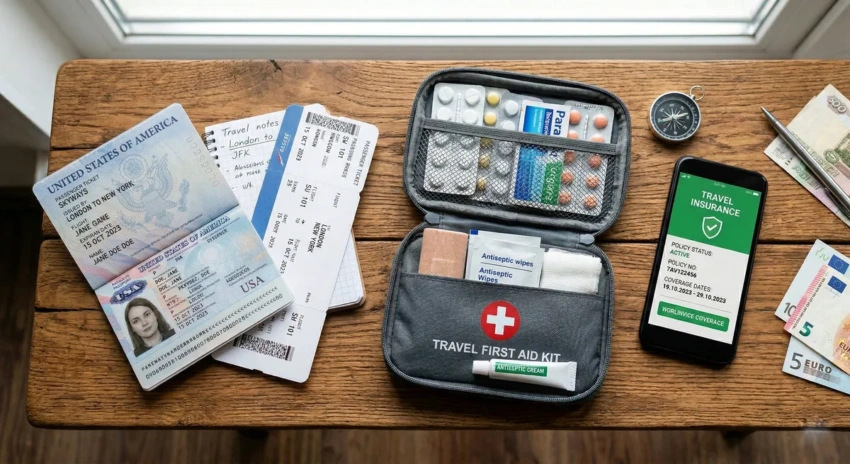
Packing a basic medical kit and securing active travel insurance are your first steps to a worry-free trip
- Routine vaccines. Check that your routine vaccinations are up to date before travel. Current travel-health guidance also includes seasonal flu and COVID-19 vaccination based on your age, health, and vaccination history.
- Hepatitis A. CDC recommends Hepatitis A vaccination for unvaccinated travelers to the Dominican Republic because the virus can spread through contaminated food and water.
- Typhoid. This is commonly discussed for travelers who will spend more time outside major resort areas, visit smaller towns or rural areas, stay with friends or relatives, or eat in settings where sanitation may be less predictable.
- Hepatitis B & Rabies. Whether these vaccines are relevant depends on your vaccination history, age, length of stay, and planned activities. A travel clinic or doctor can help assess your individual situation.
- Cholera. Current CDC guidance says there is no active cholera transmission in the Dominican Republic and cholera vaccination is not recommended for routine travel.
You can learn more about the vaccinations recommended before visiting the Dominican Republic here.
2. Food, Water and How to Avoid Food Poisoning
When researching how to avoid getting sick in Punta Cana, food and water safety should be your top priority. The CDC Yellow Book identifies traveler’s diarrhea as the most common health problem for visitors to the Dominican Republic. Across international destinations, attack rates can vary widely depending on the destination, season, and length of stay.
Why does this happen? Bacteria are the most common cause of traveler’s diarrhea, accounting for roughly 75-90% of cases, while viruses account for at least 10-25%. Symptoms can include nausea, vomiting, watery diarrhea, stomach cramps, and sometimes fever.
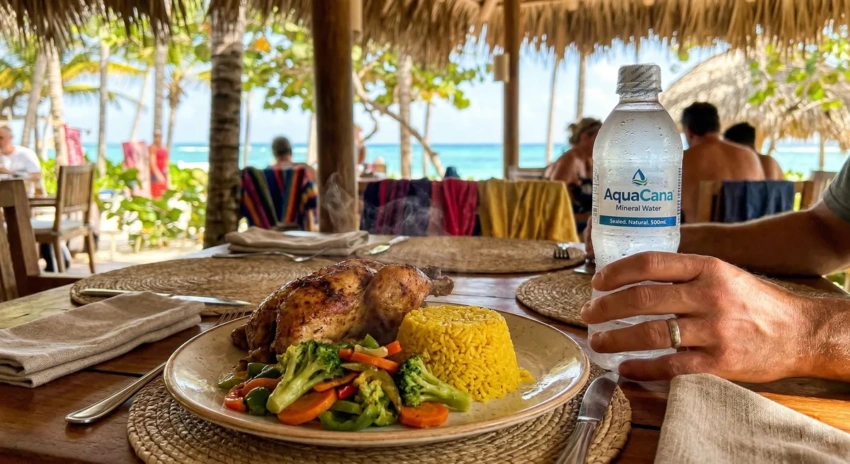
The golden rule of food safety: drink only bottled water and eat food that is served steaming hot
Golden rules for food safety
To minimize the risks, practice strict hygiene:
- Tap water is a strict NO. This is the golden rule. Never drink tap water. Use only bottled water, even for brushing your teeth. When taking a shower, try to keep your mouth closed.
- The Ice Rule. According to the CDC Yellow Book, ice served in well-established tourist locations is usually made from purified water and is generally safe. In remote or non-tourist areas, skip the ice unless you know it was made with safe water.
- Hot means safe. Eat only thoroughly cooked, steaming hot food. Avoid raw or undercooked seafood (like beachside ceviche).
- Skip the street food. Avoid buying food from mobile beach vendors. In the tropical heat, food spoils incredibly fast without proper refrigeration.
- Wash your hands. Wash your hands thoroughly before every meal. If soap isn’t available, use a hand sanitizer containing at least 60% alcohol.
How to act if you are getting sick in Punta Cana
If you do get sick, your main goal is to prevent dangerous dehydration.
Special oral rehydration solution (ORS) is designed to replace water and electrolytes lost through diarrhea or vomiting. Over-the-counter anti-diarrheal medicines such as loperamide are used for symptom relief in some situations, but they are not appropriate for everyone. CDC does not recommend loperamide alone for diarrhea accompanied by fever or blood in the stool.
If symptoms are severe, worsening, or persist for more than 48 hours, seek medical evaluation. A qualified healthcare professional can determine whether testing, prescription treatment, or other care is appropriate.
The tourist’s medicine cabinet & stomach issues
| Medication (US / Europe) | Generic / active ingredient | General information |
|---|---|---|
| Pepto-Bismol | Bismuth subsalicylate | An antidiarrheal medication also commonly associated with relief of upset stomach, indigestion, and heartburn. Suitability depends on individual health conditions and other medications. |
| Imodium A-D | Loperamide | An antidiarrheal medication that slows intestinal movement and is commonly used for short-term control of diarrhea. It may not be appropriate for all types of diarrhea or for every traveler. |
| Cipro | Ciprofloxacin | An antibiotic used to treat certain bacterial infections. Whether it is appropriate, as well as the dose and duration of treatment, should be determined by a qualified healthcare professional. |
| Zithromax | Azithromycin | An antibiotic used to treat certain bacterial infections. It is not effective against viral infections, and its appropriate use should be determined by a qualified healthcare professional. |
| Tylenol / Advil | Acetaminophen (paracetamol) / Ibuprofen | Common pain-relief and fever-reducing medications. They differ in their active ingredients, precautions, possible interactions, and suitability for individual medical conditions. |
The information above is provided for general informational purposes only and is not medical advice, a diagnosis, a treatment recommendation, or an instruction to use any particular medication. We do not recommend or endorse any specific drug, dosage, or course of treatment. Medication names, formulations, availability, prescription requirements, contraindications, and appropriate uses may vary. Always consult a licensed physician, pharmacist, or other qualified healthcare professional before taking medication, particularly prescription drugs or antibiotics. Seek prompt medical attention for severe or persistent symptoms, high fever, bloody stool, severe abdominal pain, signs of dehydration, or any other concerning symptoms.
3. Ciguatera & Which Fish is Dangerous to Eat in the DR
One of the most insidious risks when eating seafood in Punta Cana is ciguatera fish poisoning. This isn’t your usual food poisoning caused by spoiled food – it’s caused by natural neurotoxins that accumulate in the tissues of tropical reef fish over their lifetime.
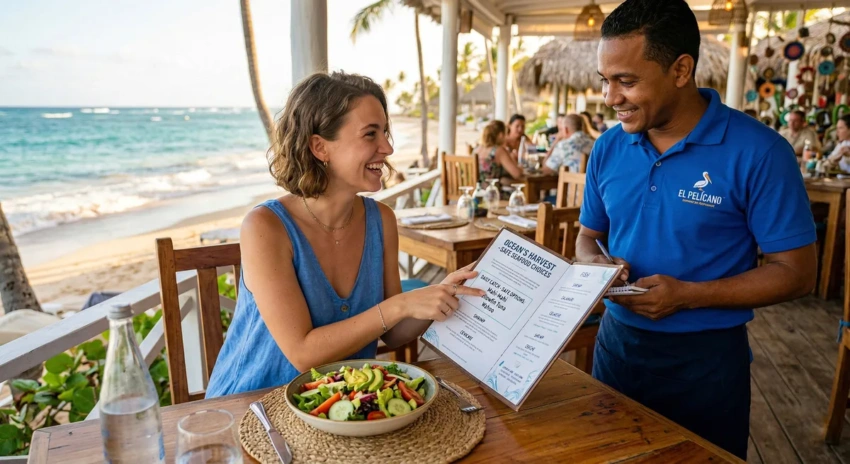
Making informed choices at seafood restaurants is key to avoiding ciguatera fish poisoning
The source of the poison is microscopic algae on coral reefs. Small fish eat the algae, and larger predators eat the small fish, building up a critical concentration of the toxin.
Ciguatera is uncommon, and most seafood meals in Punta Cana are completely uneventful. The problem is that when a reef fish does contain ciguatoxin, you cannot detect it by appearance or taste:
- Cooking doesn’t kill it. The toxins are not destroyed by frying, boiling, baking, freezing, or marinating in lime juice.
- You CAN’T spot it. A contaminated fish can smell, look, and taste completely normal and fresh.
Bizarre symptoms. Besides nausea and diarrhea, ciguatera can trigger unusual neurological reactions. One of the most characteristic signs is temperature reversal: cold objects may feel burning hot, and hot objects may feel freezing cold. Tingling, numb lips, weakness, and a sensation that your teeth are “loose” can also occur.
Reef fish associated with ciguatera
| Common name | Association | What to know |
|---|---|---|
| Barracuda | Strong association | One of the large reef predators most frequently listed in ciguatera guidance. |
| Moray eel | Strong association | Another large reef predator commonly associated with ciguatera. |
| Grouper / Red snapper | Known association | Both can carry ciguatoxin; in general, larger reef fish are more likely to accumulate higher toxin levels. |
| Amberjack / Sea bass | Known association | Both are among the reef fish listed by travel-health guidance as possible sources of ciguatera. |
| Hogfish | Known association | Confirmed Caribbean ciguatera cases have been linked to hogfish, including multiple FDA investigations in Puerto Rico. |
| Parrotfish | Possible association | Herbivorous and omnivorous reef fish can also carry ciguatoxin, although large predators are more often implicated. |
4. Counterfeit Alcohol, Heat and The “Four Ps” Rule
Counterfeit or illegally produced alcohol can sometimes be contaminated with methanol, which can cause severe poisoning, blindness, or death. The Dominican Republic experienced a serious methanol outbreak in 2021 involving more than 300 people and over 100 deaths. CDC reports that only sporadic cases have been recorded since then, but unsealed or suspicious alcohol is still not a risk worth taking.
Alcohol is also a general vacation-safety issue. Tropical heat, strong sun, ocean or pool activities, unfamiliar roads, and alcohol are a bad combination. Alcohol can contribute to dehydration and heat-related illness, and it impairs balance, coordination, reaction time, and judgment. CDC advises avoiding alcohol before or during swimming, boating, and other water activities. We strongly recommend avoiding heavy drinking in Punta Cana, and never swimming in the ocean after drinking or when conditions are difficult to judge, including at night.
Alcohol can also make simple travel mistakes more likely – ignoring food and water precautions, taking unnecessary risks in an unfamiliar area, or underestimating the sun and heat. Enjoy your vacation, but keep alcohol moderate and stay especially cautious around water, traffic, balconies, pools, and the beach.
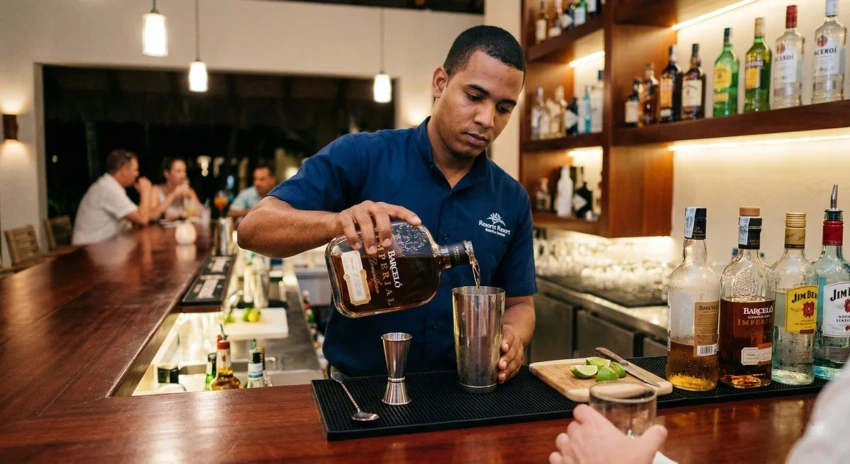
Check seals and packaging, avoid suspicious alcohol, and never mix heavy drinking with swimming or tropical heat
For counterfeit-alcohol safety, a useful consumer checklist promoted by the Wine & Spirits Wholesalers of America is the “Four Ps”:
- Place. Buy or order alcohol from established hotels, restaurants, bars, supermarkets, and other reputable businesses where the product source is easier to verify.
- Product. Factory-sealed bottles and cans are easier to verify than unknown, unlabelled, or homemade products.
- Price. An unusually low price for a supposedly premium product can be a warning sign.
- Packaging. Check that seals are intact and that labels, caps, and packaging do not look altered or improvised.
5. Tropical Sun and Heat Stroke
In Punta Cana, the sun is strong throughout the year, and the UV index can reach very high or extreme levels. High humidity can also make the heat feel more intense, especially during long periods outdoors.
Typical peak UV levels in Punta Cana
| Months | Typical peak UV index | Protection level |
|---|---|---|
| December – January | 6.4-7.0 (high) | Sun protection recommended |
| February – May | 7.7-9.6 (very high) | Extra protection; limit prolonged midday exposure |
| June – August | 11.0+ (extreme) | Maximum protection; minimize prolonged midday exposure |
| September – November | 6.5-8.6 (high / very high) | Sun protection recommended; extra care around midday |
How to avoid getting sunburned on day one
- Use a broad-spectrum sunscreen with SPF 30-50 and follow the product directions. Reapply regularly, especially after swimming or heavy sweating.
- Limit prolonged direct sun exposure around the middle of the day, when UV levels are usually strongest.
- Drink fluids regularly, especially during outdoor activity and hot weather. Alcohol can contribute to dehydration.
- Wear wide-brimmed hats and UV-protective sunglasses to protect your face and eyes.
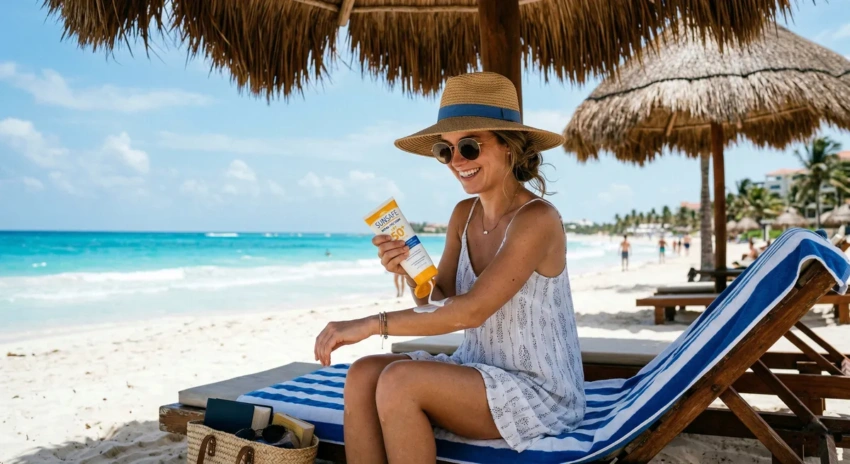
Reapply a broad-spectrum sunscreen every two hours, even when relaxing under a palapa
6. Mosquitoes: How to Prevent Dengue Fever
Mosquitoes are a real everyday nuisance in Punta Cana, and because mosquito-borne infections such as dengue and malaria are present in the Dominican Republic, prevention matters even though most visitors will never develop a serious mosquito-borne illness.
- Dengue fever is present year-round, with transmission often increasing during the rainy season (May to November). The major regional surge of 2024 has eased considerably: by epidemiological week 33 of 2026, the Dominican Republic’s confirmed dengue incidence was 3.96 cases per 100,000 inhabitants and remained within the country’s favorable endemic range. Dengue is still a reason to prevent bites, not a reason to be afraid of visiting Punta Cana. According to the CDC Yellow Book, Zika and Chikungunya have not been detected in the Dominican Republic for several years.
- Malaria also occurs in the Dominican Republic, and CDC formally includes La Altagracia – the province that contains Punta Cana – including resort areas among transmission zones. The current local picture is reassuring, however. By epidemiological week 33 of 2026, the Dominican Republic had recorded 133 confirmed malaria cases nationwide, down from 712 during the same period of 2025, and La Altagracia had recorded 9 cases. Health authorities described transmission as controlled, focused, and at historically low levels. These are population-level figures, not a tourist-specific risk estimate. In practical terms, malaria is a real but low-frequency background risk for an ordinary Punta Cana vacation. Current CDC travel guidance still advises travelers to discuss malaria prevention medication with a healthcare professional for travel to La Altagracia.
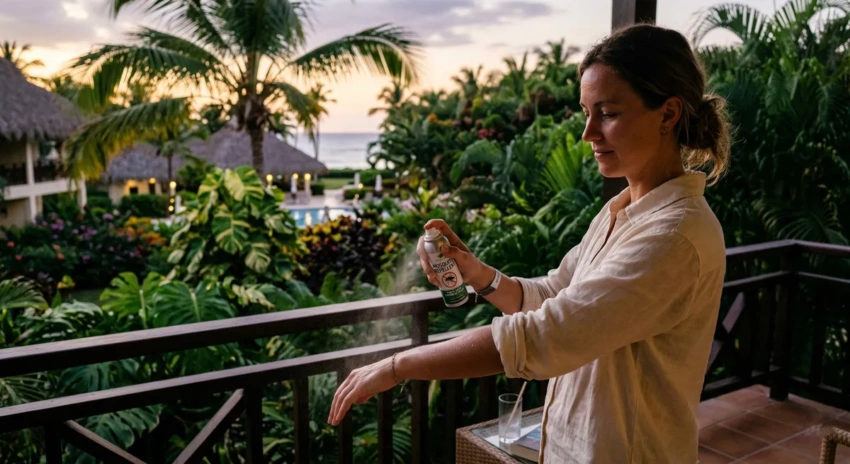
Bring a reliable mosquito repellent with you and keep it handy from your first evening in Punta Cana
Pack repellent before you fly. We strongly recommend bringing an EPA-registered mosquito repellent with you rather than waiting until you need one. Repellents are available locally, but having one in your luggage means you can use it immediately after arrival. This is especially useful when arriving in the evening or entering a room that has been closed for some time. Aedes mosquitoes can bite during the day and at night and can live indoors as well as outdoors.
How to protect yourself:
- Use an EPA-registered mosquito repellent with an active ingredient such as DEET or picaridin and follow the product label. Keep it accessible during daytime and evening activities rather than treating it as something you use only at dusk.
- Light-colored long sleeves and pants can help in places where mosquitoes are active, especially around vegetation or standing water.
- Air-conditioned or screened rooms reduce indoor mosquito exposure. If you notice mosquitoes in the room, deal with them before going to sleep rather than assuming closed doors and windows mean the room is mosquito-free.
- For rooms without effective screens or air conditioning, a mosquito net can add another layer of protection.
7. Nature Hazards Like Seaweed and Cenotes
Beyond the typical sunburns or mosquito bites, there are specific environmental factors – from seasonal marine phenomena to the delicate ecosystems of inland waters – that require your awareness. Being prepared will help you protect your health and ensure your vacation remains safe and enjoyable.
Sargassum (brown seaweed)
Periodically, the Caribbean coast is hit by massive influxes of brown seaweed called sargassum. It doesn’t just ruin the view. As it rots under the hot sun, it releases hydrogen sulfide – a gas that smells like rotten eggs.
Large amounts of decomposing sargassum can release hydrogen sulfide and ammonia, which may cause headaches, coughing, nausea, and eye or airway irritation. Most beachgoers will simply notice the unpleasant smell, but people with asthma or other respiratory problems may be more sensitive. Direct contact with dense sargassum mats can also irritate the skin because the seaweed may harbor small organisms such as jellyfish larvae.
Lakes, rivers, and cenotes
Most visitors swim in the ocean and pools without any health issue. Untreated inland freshwater is a different environment: rivers, lagoons, waterfalls, and other natural freshwater can sometimes carry germs, especially after heavy rain, flooding, or runoff from soil and animals.
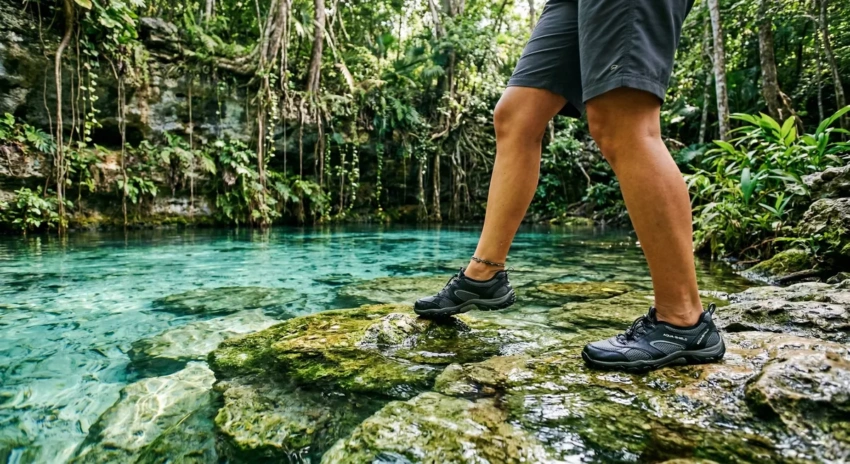
Water shoes can help protect your feet from cuts on rocks in natural swimming areas
- If you have an open wound, fresh tattoo, or piercing, it is sensible to avoid untreated freshwater and floodwater. Leptospirosis can spread through water contaminated with animal urine. Vibrio vulnificus is a different risk and is mainly associated with saltwater or brackish water rather than ordinary freshwater.
- Try not to swallow untreated freshwater while swimming.
- Rinsing or showering after swimming and wearing water shoes in rocky areas are simple ways to reduce everyday skin and foot problems.
8. Hospitals, Pharmacies, and Why You Need Insurance
Even with good preparation, unexpected medical problems can happen. The Dominican healthcare system includes both public and private facilities. Public hospitals can provide emergency care, but official travel guidance notes that resources, overnight staffing, and English-speaking staff may be more limited than in private facilities.
Punta Cana also has several private hospitals and clinics, including Hospiten Bávaro, Hospital IMG, and Centro Médico Punta Cana. Private facilities often provide a broader range of services, but payment arrangements matter. The U.S. Department of State notes that private hospitals in the Dominican Republic typically require advance payment or proof of internationally accepted insurance before admission, and hotel arrangements with particular medical providers can sometimes add costs or limit your choice of facility.
Typical private medical costs in Punta Cana (rough self-pay ranges)
| Medical service | Rough self-pay range (USD) | What can affect the bill |
|---|---|---|
| Routine private-clinic consultation | About $50-$150 | Specialty, clinic, and whether tests or treatment are added |
| Hotel / resort doctor or house call | About $100-$250+ | Convenience fees, provider arrangements, and additional treatment |
| Emergency-room evaluation / short treatment | About $300-$1,500+ | Lab work, IV fluids, medication, imaging, and length of observation |
| Hospital observation / overnight stay | About $500-$3,500+ | Facility, room type, tests, specialist care, and treatment required |
| Emergency surgery / inpatient care | Several thousand dollars and up | Procedure complexity, operating-room fees, specialist fees, and length of stay |
These figures are rough planning ranges, not price quotes. Private facilities in Punta Cana do not publish one standardized tourist cash-price list, and actual bills can vary dramatically depending on the provider, tests, treatment, insurance arrangements, and whether care is organized through a hotel or resort. Published traveler-oriented estimates and recent patient reports also vary widely, so use this table only to understand the possible order of magnitude. When possible, ask what is covered, request an estimate, and contact your travel insurer early.
Medical evacuation (Medevac)
Medical evacuation is a rare worst-case scenario, generally considered only when a serious condition requires specialized care that is not available locally. An air ambulance from the Caribbean to the United States can cost tens of thousands of dollars; current travel-insurance estimates can exceed $50,000 and in some cases reach $100,000 or more. This is not a typical Punta Cana medical expense, but it is worth checking whether your travel insurance includes medical evacuation and what limits apply.
Pharmacies in Punta Cana
Punta Cana has many modern pharmacies, including major chains such as Farmacia Carol. Familiar US or European brand names may be different, so the active ingredient is often the most useful reference when speaking with a pharmacist. For prescription medication, use a licensed pharmacy and follow the instructions of a qualified healthcare professional.

Modern pharmacies in Punta Cana carry many familiar active ingredients under local or generic brand names
9. Where to Get Help: Emergency Contacts and Resources
In the Dominican Republic, 911 is the general emergency number and is available in the Punta Cana region. Ambulance response and capabilities can vary, although services are generally more available in major tourist areas such as Punta Cana. The country also has a specialized Tourist Police force known as POLITUR (formerly CESTUR), which assists visitors in tourist areas.
Many hotels provide emergency and medical contact information through the front desk or guest services. It is still useful to save the direct numbers of major private hospitals yourself. For instance, Centro Médico Punta Cana lists a 24-hour Rescue Call Center at +1-809-473-7283 for urgent medical coordination.
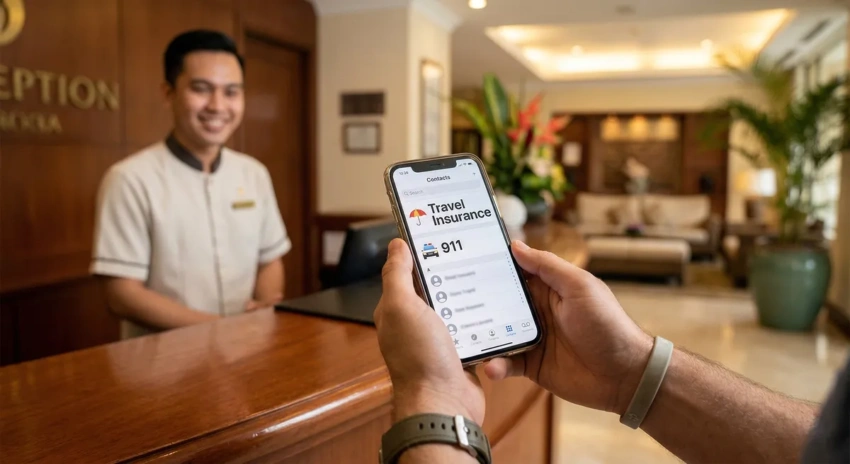
Keep emergency numbers like 911 and your travel insurance provider saved and easily accessible on your phone
Remember that government embassies (such as the U.S. Embassy) do not pay for their citizens’ medical bills or emergency flights abroad. Your travel insurance provider is your primary financial and logistical lifeline.
Essential emergency contacts in Punta Cana
| Service | Contact information | Notes |
|---|---|---|
| General emergency (police, fire, ambulance) | 911 |
Operational throughout the Punta Cana and Bávaro area. |
| Tourist Police (POLITUR) | 911 or through your hotel |
A specialized police branch dedicated to tourist safety and assistance. |
| Centro Médico Punta Cana | +1-809-473-7283 |
A 24/7 call center for international patients and insurance coordination. |
| Your travel insurance | Varies (check your policy) | Keep this number in your wallet. Call them before admitting yourself to a hospital if possible. |
Overcoming the language barrier
While doctors in private hospitals and hotel staff usually speak English, local ambulance dispatchers or off-resort pharmacists might not. Understanding and using a few basic Spanish phrases can be helpful in a critical moment.
Basic Spanish phrases for medical emergencies
| English phrase | Spanish translation | Pronunciation guide |
|---|---|---|
| I need a doctor. | Necesito un médico. | ne-se-sí-to un mé-di-ko |
| Where is the nearest hospital? | ¿Dónde está el hospital más cercano? | dón-de es-tá el os-pi-tál más ser-ká-no |
| Call an ambulance. | Llame a una ambulancia. | yá-me a ú-na am-bu-lán-sya |
| I have food poisoning. | Tengo intoxicación alimentaria. | tén-go in-tok-si-ka-syón a-li-men-tá-rya |
| I have travel insurance. | Tengo seguro de viaje. | tén-go se-gú-ro de byá-he |
| It hurts here. | Me duele aquí. | me dwé-le a-kí |
By keeping these contacts accessible and knowing how to communicate your basic needs, you can minimize any disruptions to your trip and ensure you receive quality care.
Final Thoughts
Punta Cana remains a safe and world-class destination, and most visitors enjoy their trip without serious health problems. A little preparation and basic awareness can reduce many of the common issues that do occur – from sunburn and mosquito bites to stomach problems.
Key rules for your ideal vacation:
- Food, water and alcohol awareness. Drink bottled or purified water, avoid suspicious alcohol, keep drinking moderate, and never combine alcohol with swimming or other risky water activities.
- Climate protection. Don’t underestimate the tropical sun, stay hydrated, and keep mosquito repellent handy.
- A reliable safety net. Travel insurance can make a major difference if you unexpectedly need private medical care or evacuation.
- Choose wisely. Established hotels and accommodations with clear safety procedures can make it easier to get help if something goes wrong.
Health guidance and local epidemiological information in this article were checked against current CDC Travelers’ Health / Yellow Book information and Dominican Republic epidemiological surveillance. Last updated: September 2026. Recommendations and local conditions can change, so check current official guidance before travel.
FAQ about how to avoid
getting sick in Punta Cana
How to prepare stomach for the Dominican Republic?
Vacation prep should start about a month before your flight. You can prepare by consulting a doctor and assembling a solid travel medical cabinet:
- Vaccines. Ensure you are up to date on routine shots and highly consider the Hepatitis A vaccine.
- Rehydration. Pack oral rehydration salts (ORS) to quickly restore fluid balance if you do get sick.
- Medication. Bring anti-diarrhea pills like Imodium or Pepto-Bismol for symptom relief.
- Antibiotics. Ask your doctor for a prescription antibiotic (like Ciprofloxacin or Azithromycin) for severe bacterial infections.
How to avoid salmonella in the Dominican Republic?
About 80% of stomach issues are caused by bacteria like Salmonella or E. coli. Your best defense is strict food hygiene:
- Always wash your hands thoroughly before every meal or use a hand sanitizer with at least 60% alcohol.
- Only eat food that is cooked properly and steaming hot.
- Skip mobile beach vendors, as food spoils incredibly fast in the tropical heat without refrigeration.
How to not get sick at all-inclusive?
While luxury resorts are generally very safe, you still need to be proactive:
- Hydration. Drink only bottled water and consume 2-3 liters a day. Ice at certified resorts is safe.
- Sun protection. Apply SPF 30-50 sunscreen every 2 hours and avoid direct sun between 11:00 AM and 3:00 PM.
- Mosquito defense. Always use a reliable repellent (20-30% DEET or Picaridin), especially at dawn and dusk.
- Safe alcohol. Stick to recognized international or major local brands and avoid suspiciously cheap liquor.
Can you brush your teeth with tap water in Punta Cana?
Absolutely not. Tap water is a strict NO. You should use only bottled water, even for brushing your teeth.
Additionally, when taking a shower, try to keep your mouth closed to avoid accidentally swallowing the water.
What foods to avoid in Dominican resort to not get sick?
To minimize your risks of food poisoning and specific local toxins, you should strictly avoid:
- Skip undercooked seafood, including beachside ceviche.
- Never eat Barracuda or Moray Eel, as they carry a high risk of ciguatera fish poisoning. Be cautious with large Grouper or Snapper.
- Avoid unverified mixed cocktails off-resort and cheap, locally brewed alcohol like “clerén”.
Is traveler's diarrhea common in the Dominican Republic?
Yes, “traveler’s diarrhea” is the most common issue that ruins a vacation. Medical statistics show that anywhere from 15% to 50% of tourists experience stomach issues during their trip.
Acting quickly with rehydration salts is your main goal if you start feeling unwell.
Is it safe to eat fruit in the Dominican Republic?
The safest approach is to stick to the golden rule: eat only thoroughly cooked, steaming hot food. However, if you want to eat fresh fruit, only do so at large, certified resorts where they use purified water for washing.
You should completely avoid buying cut fruit from mobile beach vendors, as food spoils incredibly fast in the tropical heat.
Can you eat salad in Punta Cana?
To completely minimize the risk of stomach issues, it is best to avoid raw foods and eat only thoroughly cooked meals.
While salads at luxury resorts are generally washed with purified water, you should definitely avoid eating fresh salads if you are eating outside the resort, such as at small local cafes or during excursions.
What is the number one cause of death in the Dominican Republic?
The provided medical guide specifically focuses on illnesses and does not state the number one cause of death. However, when leaving the resort, road accidents are widely considered the primary non-disease threat to tourists due to chaotic local traffic and aggressive driving styles.
Can I brush my teeth with Dominican tap water?
No, tap water is a strict NO. You must use only bottled water, even for brushing your teeth. To be extra safe, try to keep your mouth closed while taking a shower so you don’t accidentally swallow any water.
Is the ice in the Dominican Republic safe to drink?
This depends entirely on your location:
- Inside resorts. Ice in large, certified Punta Cana resorts is perfectly safe because it is made from purified water.
- Outside resorts. If you are in a village or on an excursion, you should always ask the bartender for drinks without ice.
What is the waterborne illness in the Dominican Republic?
There is no single waterborne illness, but rather several risks associated with contaminated water:
- Traveler’s diarrhea is caused by bacteria like E. coli or Salmonella in food or water.
- Hepatitis A is a highly contagious virus that spreads easily through contaminated food and water.
- Leptospirosis is a dangerous bacterium found in fresh inland rivers, lakes, and cenotes.
- Cholera is a past threat; an outbreak that began in 2022 was successfully stopped by local authorities by mid-2025.
What to do if I accidentally drank tap water?
Do not panic, but monitor your body. If you start experiencing stomach issues, take these steps:
- Use oral rehydration salts (ORS) to quickly restore your body’s fluid balance.
- Take an anti-diarrhea pill like Imodium for comfort. DO NOT take these pills if you have a high fever or bloody stool, as it can trap the infection inside your body.
- If your severe symptoms last more than 48 hours, visit a private clinic to get a prescription for antibiotics.
Updated on: . Author: