

Etiquette, Culture & Mentality in the Dominican Republic – A Complete Guide for Tourists in 2026
Welcome to our full guide on the Dominican Republic etiquette. All you see is palm trees, a Photoshop-colored ocean, and pineapple-infused cocktails. It’s easy to think that the only rule here is “relax.” However, it’s a country with proud people, long-standing traditions, and a very clear code of conduct. If you act like a “typical tourist”, you’ll get smiles but they’ll be just a phony smile to save your wallet.
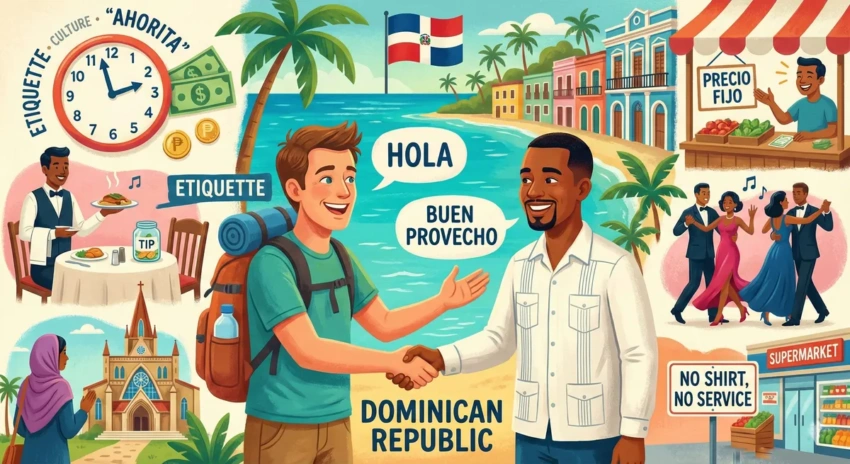
Dominican cultural etiquette – a complete guideline for tourists
If you understand a few simple things, the Dominicans’ attitude will change drastically. They’ll pour you more rum, give you better tables, and shake your hand sincerely. Let’s figure out how to become an “Amigo” here, not just a “Gringo.”
1. The Magic of Greeting: More Than Just Politeness
For the majority of cultures, it’s okay to enter an elevator solently or approach a salesperson and immediately ask, “How much is it?” But in the Dominican Republic, this is level 80 rudeness.
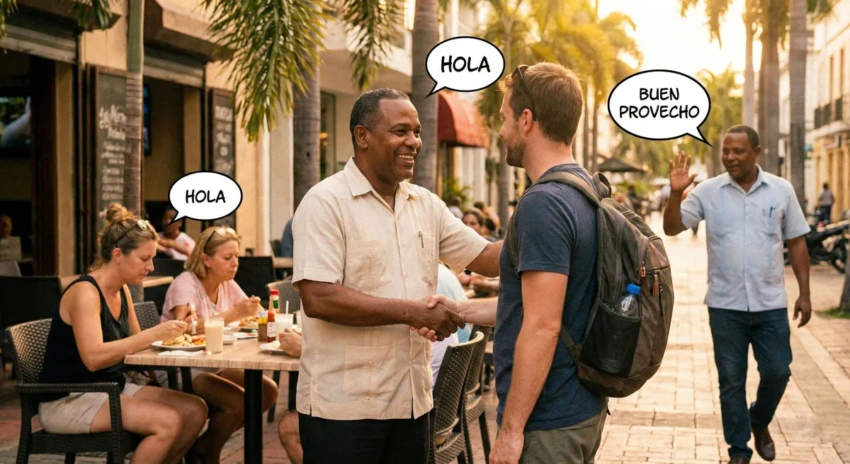
Greeting etiquette and politeness in the Dominican Republic
The cult of “Hola”
Here, communication is the social glue. A person who doesn’t say hello is considered not just rude, but arrogant.
- Golden rule: wherever you go – in a taxi, small shop, elevator, or even just walking up to the bar – say hello first.
You can use this easy-to-remember vocabulary:
- Before 12:00 p.m. – Good afternoon (Buenos días).
- During the day – Good afternoon (Buenos tardes).
- In the evening – Good night (Buenos noches).
- Or the universal, with a smile: Hola! How are you? (Hola! ¿Cómo estás?).
It’s a split second but it changes everything. The waiter will arrive faster, the taxi driver will turn on the meter fairly, and the seller might even lower the price. Understanding this simple rule is the foundation of proper etiquette in the Dominican Republic.
Personal space and tactility
Be ready that Dominican people are warm and tactile. For instance:
- If a local stands a little closer to you during a conversation (invading your “intimate zone”), don’t back away. This is a sign of trust. Moving away may be seen as disgust.
- If you’ve already known each other (even for 5 minutes), you might be patted on the shoulder. Men often shake hands upon meeting, turning into a half-hug (a pat on the back). This is normal and friendly.
- Look into the eyes. Open people are appreciated. A shifty gaze arouses suspicion.
The sweetest tradition is “Buen Provecho”
This is almost unheard of in Europe but it’s sacred in the Dominican Republic. If you enter a restaurant and pass tables where people are already eating, it’s customary to say “Buen provecho” (Bon appétit). It doesn’t matter whether you know them or not. It doesn’t matter whether they’re tourists or local workers. Say it, and watch their faces light up.
A chorus of “Gracias!” will follow. It’s a small gesture that instantly elevates you from being an outsider to being one of the locals.
2. Dress Code and Etiquette in the Dominican Republic
Many tourists fall into this trap: “I’m at a resort, the beach is everywhere.” But the Dominican Republic is a Catholic country with rather conservative views on propriety. What’s acceptable at the hotel poolside can be considered provocative behind a fence.
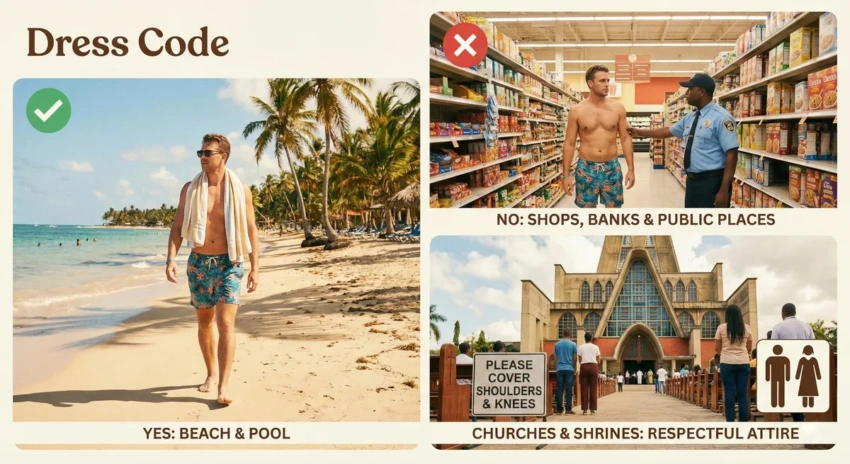
Dress code and etiquette in the DR
There’s an invisible line that needs to be felt. Inside the hotel (resort), you can wear almost anything. But as soon as you venture into the city (even the touristy Bavaro district), the rules change. Keep in mind this etiquette rule to avoid awkward stares in the Dominican Republic.
The “No shirt, no service” rule
Imagine this: you want to buy some rum or fruit, and you walk into a supermarket (for example, Super Pola or Jumbo) straight from the beach: a shirtless man, a woman in a bikini and pareo. Local reaction: you’ll likely be stopped by a security guard at the entrance and politely but firmly asked to dress.
- Why? For Dominicans, appearing half-naked in a public place (shop, bank, pharmacy) is a sign of poor manners (falta de educación). It’s perceived as disrespectful to others.
- Small tip! Always carry a T-shirt, tunic, or shorts with you. Throw them on before entering any air-conditioned space.
A wet seat is a taboo
If you’ve called an Uber or caught a taxi to get from Macao Beach to your hotel, make sure your clothes are dry.
Sitting on someone else’s car or bus with wet swimsuits is a serious insult to the driver. Dominicans are very particular about the cleanliness of their cars. Lay down a towel if you’re still wet, and be sure to ask permission: “¿Puedo sentarme?” (May I sit down?).
Evening out: leave your flip-flops by the pool
Dominicans love to dress up. For them, Friday or Saturday night is an opportunity to show off.
- If you’re going to a nice place (like Coco Bongo, Bachata Rosa, or dinner at the Cap Cana Marina), forget about board shorts and flip-flops.
- Men are advised to wear jeans or light trousers (chinos), closed shoes (sneakers, loafers, dress shoes), and a shirt or polo. Many nightclubs simply won’t let you in shorts due to face control.
- As for women, Dominicans love bright dresses, heels, and makeup. You don’t have to wear a full-length evening gown, but a nice sundress and sandals are much more appropriate than board shorts.
Churches and shrines
If you’re taking a tour of the Basilica of Higuey, the country’s main Catholic church, the rules are strict.
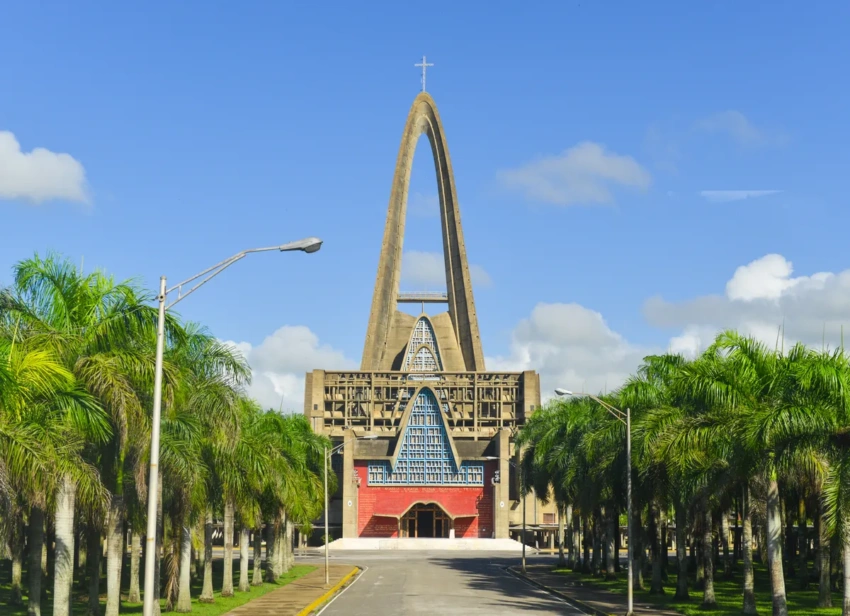
Basilica of Our Lady of Altagracia, Higuey
Shoulders and knees must be covered. This applies to both men and women. Security guards at the entrance will turn away tourists wearing short skirts or tank tops without question. Bring a scarf or pareo to drape over your shoulders.
The cult of purity and smell
There’s an interesting cultural nuance: a Dominican may be poor, but they’ll always be clean, neatly groomed, and smelling delicious. Barbershops and perfume are revered here.
- If you ride a local bus (guagua), you’ll notice that even the working people smell of cologne. For a tourist, this means one thing: untidiness is frowned upon. The “hippie” style with unwashed hair won’t be understood here.
Okay, let’s dive into one of the most confusing topics for tourists: time and money. If you understand how it works, you’ll save yourself a ton of stress and even money.
3. Time and Money: How to Avoid Going Crazy and Going Broke
In the Dominican Republic, time flows differently, and adhering to etiquette requires patience with the local “island time”. It’s not linear, but rather… “approximate.” And the attitude toward money is built on gratitude and play.
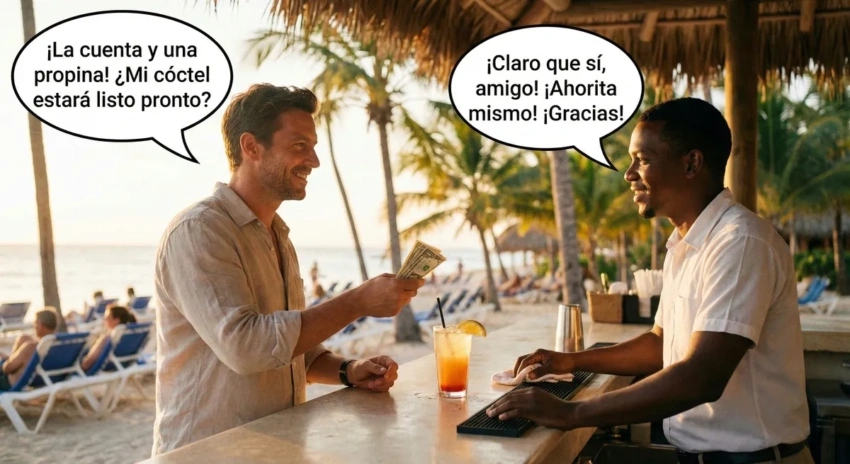
Tipping culture in the DR
The great mystery of the word “ahorita”
If you learned that “ahora” means “now,” forget it. In the DR, there’s a word called “Ahorita.” When a waiter or local friend tells you, “I’ll make it ahora,” it means “now.” But if they say, “Si, ahorita,” it could mean anything:
- In 5 minutes.
- In a couple of hours.
- Never.
Please, don’t get angry! This isn’t laziness or an attempt to deceive you. It’s cultural code: Dominicans have a hard time saying a firm “no” or admitting they’re running out of time. It’s easier for them to say “ahorita” to keep the atmosphere pleasant.
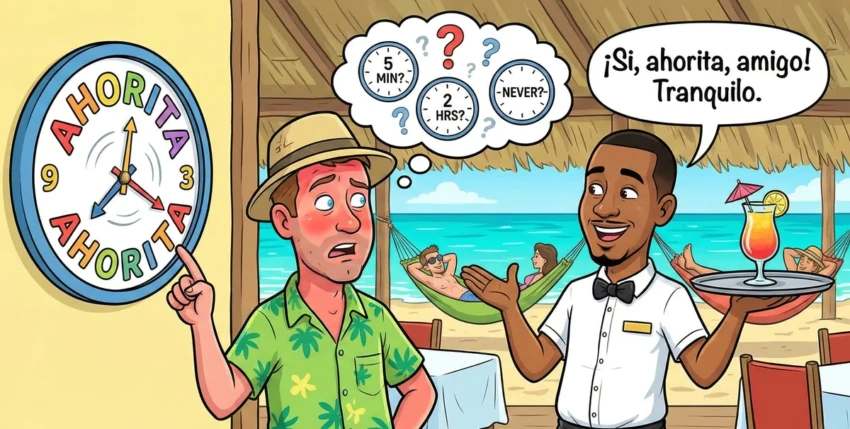
Meaning of ‘ahorita’ in the DR
If you’re told “ahorita,” relax and order another cocktail. You’re on an island. Tranquilo (Tranquility) reigns here. Trying to rush someone by snapping your fingers or yelling will only result in them ignoring you.
Tipping (propina): to whom and how much?
The Dominican Republic is a country with low wages, so tips are not just a bonus, they are part of the survival of the staff.
Restaurants and the “Ley de Propina” (tipping law): look closely at your receipt. You’ll see a line that says “Legal Service Charge 10%” (plus 18% tax). Many tourists think, “Oh, the tip is already included!” and leave.
- Reality: This 10% is legally required to be shared among all restaurant staff (from the cook to the cleaner), and it often reaches your server very late or incompletely.
- Etiquette: If you were pleased with the service, leave an additional 5-10% in cash (dollars or pesos) right in the receipt folder. This shows you appreciate the person’s personal service.
All-inclusive hotels and resorts: yes, you have all-inclusive. But:
The magic of the dollar: who to thank to relax like a king
| Who | How much | Secret tip (Why you should do it) |
|---|---|---|
| Bartender (at the hotel) | $1 (every couple of orders) | A magic dollar turns a “simple cocktail” into a drink with good imported alcohol and skips the line. |
| Maid | $1-2 per day | Leave it on your bed or nightstand. In return, you’ll receive a perfectly cleaned room, extra water, and fresh towels. |
| Waiter | 5-10% (on top of the bill) | Even if your receipt says “10% service charge,” it goes into the general fund. Cash in hand is your personal thank you. |
| Tour guide | $5-10 per person | If a guide has made your day interesting, it’s considered bad manners to leave without thanking them. |
| Porter | $1-2 per suitcase | Standard fee. Just keep small bills in your pocket upon check-in. |
The art of bargaining (regateo)
Bargaining is necessary in the Dominican Republic, but it’s important to know where.
Where you SHOULD bargain:
- Souvenir shops on the beach.
- Art and craft markets.
- Unmetered taxi drivers (or Ubers).
- Excursion vendors on the street.
- Life hack! The price for tourists (“Precio para gringo”) is inflated by 2-3 times. If they say $50? Offer $20. Laugh, smile, pretend to leave. Dominicans love this theater. If you bargain with a smile, they’ll lower the price. If you bargain aggressively, they won’t.
Where you SHOULD NOT bargain:
- Restaurants with a menu.
- Supermarkets.
- Pharmacies.
- Shopping malls (malls) with boutiques. Prices there are fixed (fijo).
4. Taboos and Red Lines: What’s Best to Keep Silent
Dominicans are an open and tolerant people, but there are topics that affect them like a red rag to a bull. Knowing the topics you should avoid or be careful with is a must if you want to follow etiquette norms & rules in the Dominican Republic.
Haiti – the topic of “Non Grata”
This is the nation’s most sensitive nerve. Relations between the Dominican Republic and neighboring Haiti are historically complex and tense.
- Never start a conversation about politics, migration, or the history of conflicts with taxi drivers, bartenders, or casual acquaintances. You risk getting into a heated and not always pleasant discussion.
- If you want to talk about something national, talk about baseball (Pelota). Dominicans are obsessed with baseball. If you know even one name (for example, “Big Papi” David Ortiz), you’ll instantly become best friends.
Religion is a serious and ethical issue
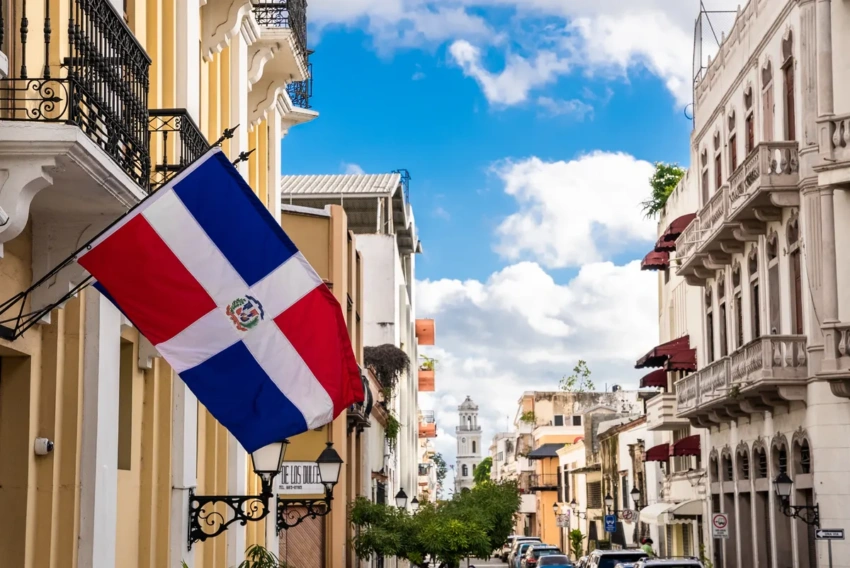
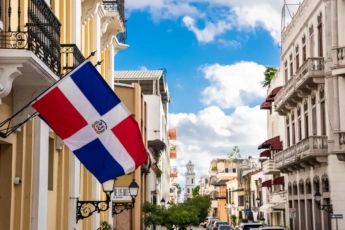
National Dominican flag with the Bible in the centre
The Dominican Republic is a deeply religious country. The Bible is depicted directly on the national flag (in the center of the coat of arms).
- Symbolism. You’ll see the words “Dios es Amor” (God is love) or “Regalo de Dios” (Gift of God) everywhere: on taxi windshields, on barber shop signs, and on menus.
- Taboo. Joking about religion, the church, or loudly blaspheming in public is considered bad manners. This is not taken lightly here.
Photos of local residents
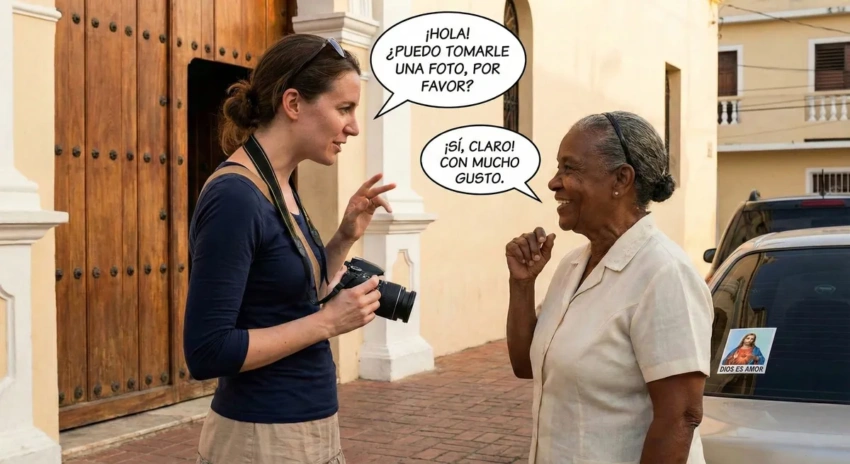
Etiquette for photographing local Dominicans
The Dominican Republic is very colorful: grandmothers smoking cigars, children in school uniforms, colorful fruit vendors. Your hand automatically reaches for the camera.
- Don’t act like you’re at a zoo. Taking photos of people point-blank without permission is an insult.
- Smile and ask, “¿Una foto, por favor?” (One photo, please?). In 90% of cases, they’ll be happy to pose for you, especially if you show them the results on a screen later.
5. Street Safety in the Dominican Republic & Etiquette
Many tourists are afraid to leave their hotels after reading horror stories. The truth, as usual, is in the middle. Tourist areas (Bavaro, Punta Cana, Cap Cana) are safe, but you shouldn’t “yawn.”
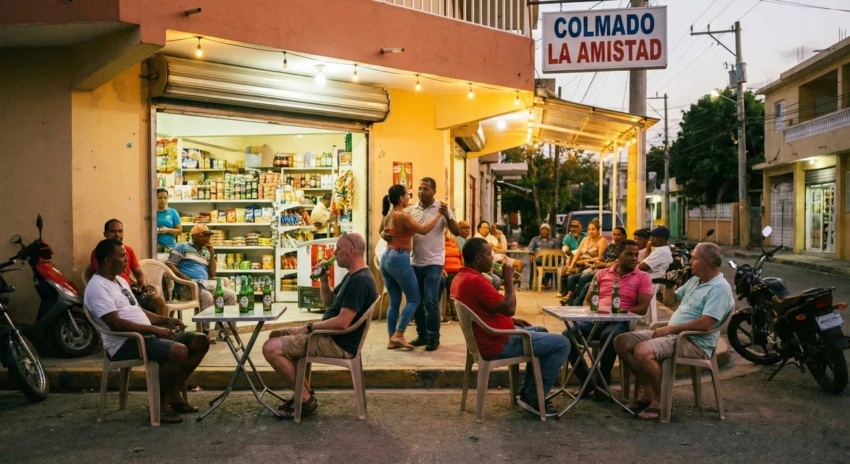
Colmado: A hub of street life and safe socializing
Sparkling Christmas Tree syndrome
- Forget about going out for a stroll around the city decked out in gold chains, expensive watches, and waving the latest iPhone.
- There’s petty street crime (theft) in the Dominican Republic. Don’t provoke it. Leave expensive jewelry in a safe. Dress modestly – this way you’ll blend in with the expat crowd and be less likely to attract the attention of “motorcycle robbers.”
Who are the Sankie Pankies? (A cultural phenomenon)
You might encounter well-groomed, muscular, and incredibly charming young men on the beach who shower lonely tourists with compliments. To handle it appropriately, you should know this modern part of etiquette.
- These are professional gigolos (called Sankie Panky). Their goal isn’t your heart, but your wallet, a dinner you pay for, or a visa to your country.
- Chat, dance, enjoy the compliments (it’s nice!), but keep your wallet under wraps and don’t take declarations of love seriously within the second minute of meeting someone.
Drugs – prison, not romance
You might be offered “something more fun” on the beach or in a club.
- The Dominican Republic has draconian drug laws. A single joint can land you in jail for years, and no consulate will help you. The police have zero tolerance for tourists in this regard. Just say a firm “No, gracias” and leave.
How to buy excursions without getting scammed?
On the beach, you’ll be offered a “VIP tour to Saona” for $30. Don’t fall for it. They usually offer old boats, bad food, and hidden extras.
If you want high-quality service, insurance, and a guarantee that a transfer will actually pick you up, book online with licensed companies. EverythingPuntaCana is one of the largest services in the region: we have their own boats, new buggies, and the best guides. Plus, you see real reviews and prices upfront, instead of haggling in the heat of the moment.
-
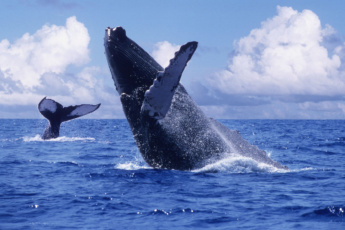
The Best Samaná Whale Watching Tour 2026 – Humpback Whales, Cayo Levantado, El Limon Waterfall
from $149 View Details -
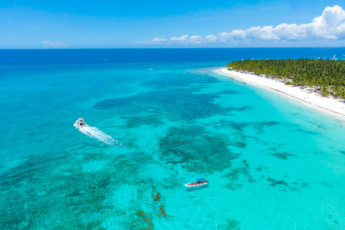
Private Isla Saona VIP Tour – Full-Day, Blue Lagoon, Snorkeling, Mangrove Forests
from $810 View Details -
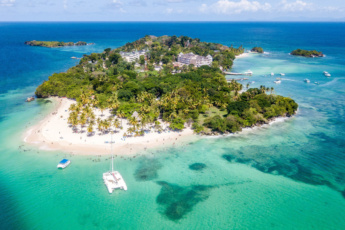
Cayo Levantado (Bacardi Island) and El Limon Waterfall Tour – Samana’s Best 2-in-1 Tour 2026
from $145 View Details -
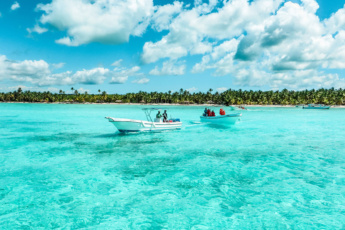
Isla Saona Boat Tour – Toro and Palmilla Beach & Natural Pool
from $149 View Details -

Fantastic Catalina Island Private Boat Tour (from Punta Cana) – With Fishing & Snorkeling
from $1795 View Details -
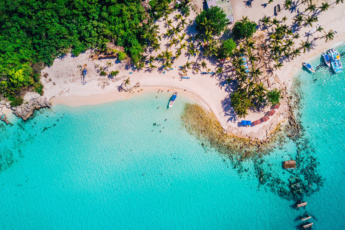
Turtle Island & Snorkeling Tour (from Punta Cana) – Catuano Channel, Cayo Ratón, Isla Saona
from $120 View Details
6. Where to Stay: A Safe Oasis
When it comes to comfort and privacy, accommodation choice plays a huge role. All-inclusive hotels are convenient, but they’re always like dorms: shared pools, food queues, and noisy neighbors.

From shared chaos to exclusive calm. Make the right choice
If you’re traveling with a group or family and want complete control over hygiene and quiet, consider renting a villa. In Punta Cana, this is often cheaper than renting 3-4 hotel rooms.
-

Luxury All Inclusive Villa Waterfall in Punta Cana (Bávaro, Cocotal) – Private Pool, BBQ, Maid, Chef & Meal Plans
from $1320 / night View Details -
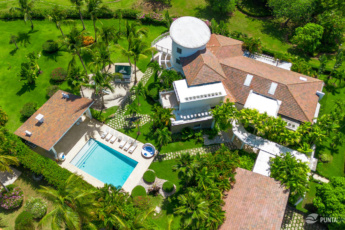
Villa Désirée – Luxury Golf Villa in Punta Cana’s Prestigious Cocotal Golf & Country Club – Huge Private Pool & BBQ Area, Kids’ Playground
from $1099 / night View Details -
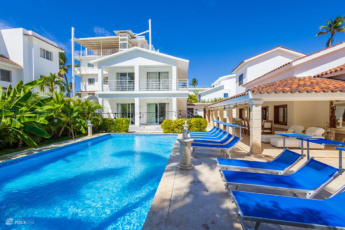
Villa May – New Modern Beachfront 7BR Villa with Pool & Maid in Bavaro, Los Corales
from $1200 / night View Details -
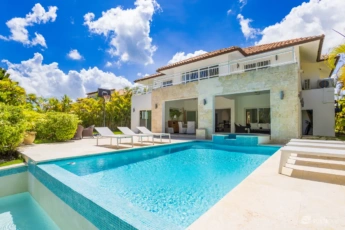
Spacious 4-BR Punta Cana Golf Villa in Cocotal – Private Pool, Jacuzzi & Basketball Hoop for Family Fun
from $649 / night View Details -

Villa Agapi (Caleton Estates 57) – The Most Beautiful Ocean View Villa in Cap Cana
from $2850 / night View Details -

Exclusive Ocean View 5-Star Cap Cana Villa for Rent – Chef, Butler, Maid & Golf Cart
from $4600 / night View Details
Life hack for insiders: to avoid overpaying on aggregators and ensure the photos match reality, book through trusted local agencies. A full catalog of verified villas (with prices without Airbnb markups!) you can find on our website. We meet you at the airport and handle any issues on-site, from booking a chef to renting a yacht.
Conclusion: The Secret to a Simple Smile
There’s a saying in the Dominican Republic: “Todo tranquilo” (everything is calm). They don’t like fuss, aggression, or furrowed brows. Here, in the Dominican Republic, the biggest cultural and etiquette mistake tourists from colder climates make is walking around with stone faces.
- The main secret is your smile. Smile at the security guard at the entrance, the cleaning lady in the restroom, or bus driver. Here, a smile isn’t a sign of flirtation or silliness; it’s a sign of being a good person.
Be more relaxed, say hello first, respect their leisurely pace of life – and the Dominican Republic will open its arms to you in a way it doesn’t to the average package tourist.
Frequently asked questions about
etiquette and culture in the DR
What is the etiquette in the Dominican Republic?
The main rule is to say hello. If you enter an elevator or a store and say nothing, you’ll be considered rude. Second, appearance. Dominicans take great care of themselves. Being clean, combed, and smelling good is a must. And third, respect for hierarchy. Elderly people are treated with respect, offered their seats, and addressed as “Usted.”
What are the 5 most important table manners?
If you’re invited to dinner at a Dominican home or at a fine restaurant:
- Always wish everyone at the table (and even your neighbors) bon appétit (“Buen provecho”) before you begin eating.
- Keep your hands visible (on the table), not in your lap.
- Wait for the host to show you your seat.
- If you lick your plate clean, the host might think you’re hungry and offer more. Leave a small piece to show, “It was delicious, but I’m full.”
- The person who invited you usually pays. Splitting the bill (Go Dutch) is not customary here unless agreed upon in advance.
Is $10 USD a good tip in the Dominican Republic?
The minimum wage in the Dominican Republic is low.
- $1-$2 is a normal thank you for helping with a suitcase or cleaning a room.
- $5 is generous for a waiter for a regular meal.
- $10 is a king’s tip (for example, for a guide after a tour or a waiter for a large family dinner). You will be remembered and treated like a VIP.
Can you not flush toilet paper in the Dominican Republic?
The sewer pipes in the Dominican Republic (even in many good hotels) are narrower than in Europe, and the water pressure is weaker. Paper can easily cause clogs.
- If there’s a trash can next to the toilet, throw the paper in there.
- Only if there’s a sign in the toilet that says “You can flush paper.”
Do you pass bread to the left or right?
As in most Western cultures, dishes are passed counterclockwise at a communal table (from your right, or left, around the table). But honestly, in the relaxed Dominican atmosphere, no one will judge you if you pass the basket to the person on your right. The key is to offer.
How much do I tip at an all-inclusive resort in the Dominican Republic?
Yes, you have all-inclusive, but the staff works for next to nothing.
- Bartender. $1 for every couple of cocktails (and the alcohol will flow like water).
- Maid. $1-2 per pillow per day (and you’ll have impeccable cleanliness and water).
- Porter. $1-2 per suitcase. It’s better to change $50 in one-dollar increments in advance – it’s the best investment in comfort.
Where is it better to book excursions and cars: at the hotel or online?
Hotel guides often inflate prices two to three times for the same tours. Street vendors may take advance payment and disappear. Local online platforms offer a happy medium. For example, we offer all the island’s top activities, from swimming with dolphins to helicopter charters. You get an official voucher, 24/7 support, and reasonable prices.
Is it better to use dollars or pesos in the Dominican Republic?
- Dollars ($) are accepted everywhere in the tourist area. They’re convenient for paying taxi drivers, guides, and for tips.
- With Pesos (DOP) it’s cheaper to pay in supermarkets, local cafes (for coffee/lunch), and for bus fares. The dollar exchange rate in stores can be unfavorable.
Never exchange money at the airport (the exchange rate is extortionate). Withdraw pesos from an ATM or exchange them at a bank.
Can you kiss in public in the Dominican Republic?
Dominicans are romantic but conservative. Holding hands and kissing on the cheek (once upon greeting) is the norm. But long, intimate kissing or erotically charged hugs on the street or in the park are considered inappropriate. Save that for your hotel room.
What is a hanky panky in the Dominican Republic?
This is the local term for beach ‘gigolos’. These are young, athletic Dominicans who “work” hotel beaches. Their goal is to make lonely tourists fall in love with them in order to receive money, expensive gifts, or (the jackpot!) a visa to Europe or the US.
Enjoy their attention and bachata lessons, but don’t expect eternal love at first sight.
Are there clothing optional resorts in the Dominican Republic?
The Dominican Republic is a Catholic country, and public nudity is prohibited by law. Sunbathing topless on a public beach (even in Bávaro) is prohibited; the police may approach. However, there are several Adults Only hotels (for example, in the Punta Cana area or in the north of the country) where topless sunbathing is permitted.
Full nudism (Clothing Optional) is extremely rare (for example, at Caliente Caribe, if it’s open, or at private gated villas).
Can you wear shorts in the Dominican Republic?
Yes, but not everywhere:
- On the street – yes, no problem.
- At a bank/government office – no. A security guard will not let you in. Men in shorts and sandals are not allowed into official places (including immigration offices). Pants and closed-toe shoes are required.
- You can wear them to the club but many of them have a dress code: no shorts for men.
What does pariguayo mean in Dominican slang?
This is one of the most popular Dominican words. It’s not particularly offensive, but rather derisive. It’s used to describe someone who’s slow, awkward, can’t dance, or simply naive.
According to the legend, it’s also said to have originated with American soldiers who, at parties, didn’t dance but simply stood and watched – “Party Watcher.” Locals have adapted it to “Pariguayo.”
Is donkey beach clothing optional?
There are no official nudist beaches (in the European sense) in the Dominican Republic. Any public beach is subject to the laws of the country, where nudity is prohibited. If you decide to disrobe on a private beach, you risk either a fine or unwanted attention from locals.
What food to stay away from in the Dominican Republic?
- Tap water! Never drink it.
- In cheap cafes, salads may be washed with tap water. It’s safer to choose boiled or fried vegetables.
- Be careful of beach food, namely with oysters or ceviche, that vendors carry around in buckets in the heat. You never know how long they’ve been sitting there.
Updated on: . Author: