

Punta Cana Seaweed Guide 2026: Best Time to Visit and How to Find Clean Beaches
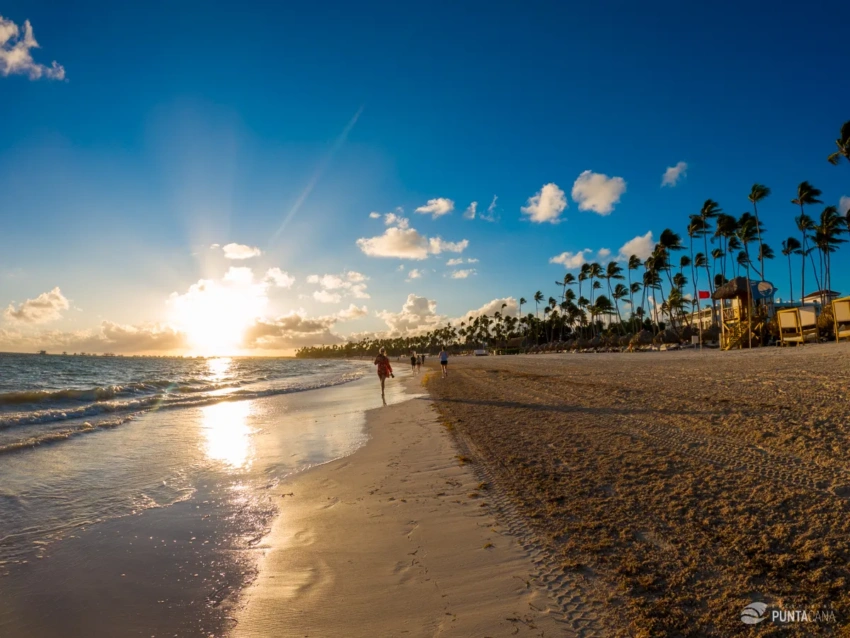
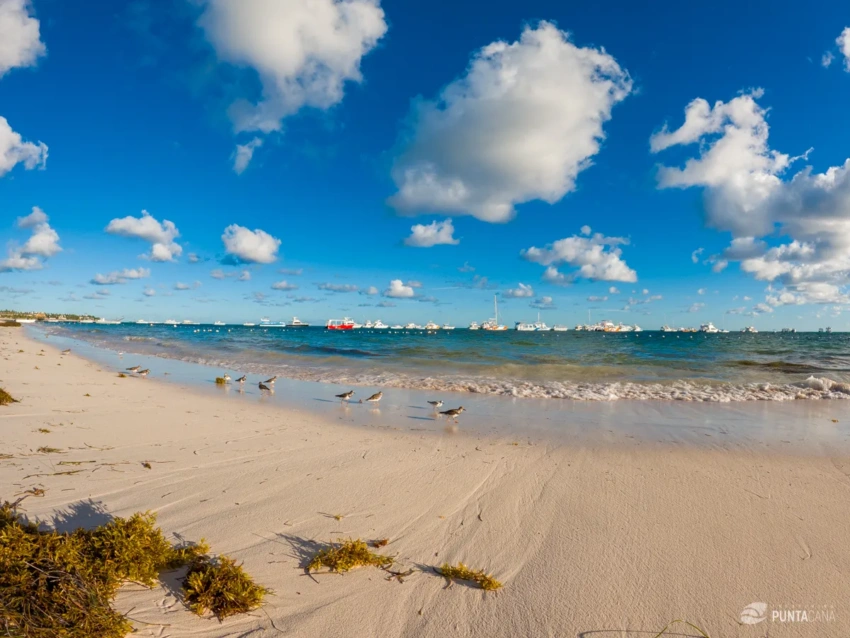
Punta Cana, Bavaro Beach in December
Before your trip to Punta Cana, ask yourself what you’re actually going there to do. If you love spending whole days on the beach and enjoy swimming, then, of course, you need to be attentive and keep a close eye on the seasonality and the current seaweed situation.
But more often than not, people fixate on whether there’s seaweed and then, even in the most expensive season, end up spending a minimal amount of time on the beach. That’s often how it goes.
So if you’re not the type who lives in the ocean 24/7, you should absolutely consider a trip to Punta Cana. It’s worth it, even when sargassum pops up here and there. That’s actually when prices drop noticeably, and excursions aren’t just available – they’re often more appealing. Expect fewer people and far more comfortable transfers.
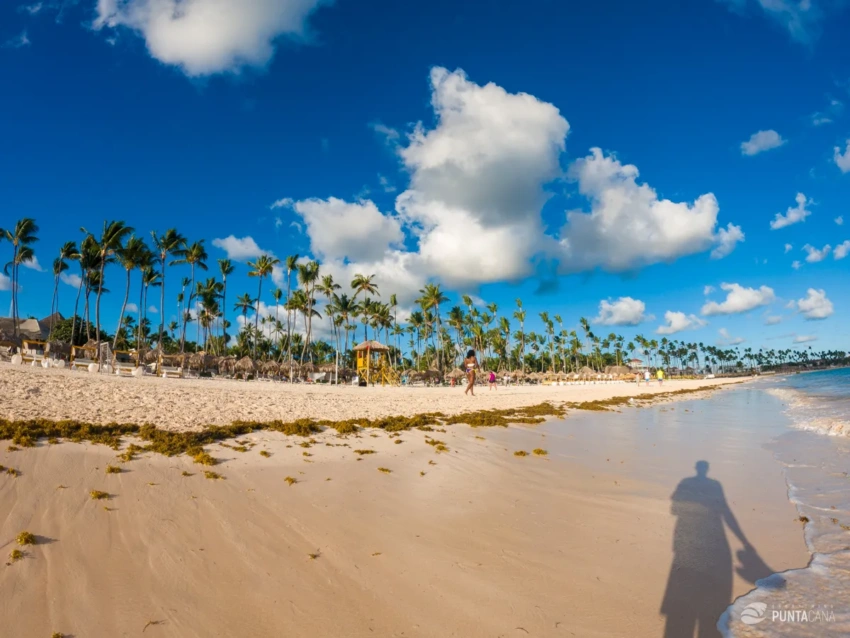
Punta Cana Seaweed
Instead of elbow-to-elbow buses and shoulder-to-shoulder boats, you get room to breathe and a calmer pace. You’re taking Punta Cana’s sights and tours at the pace they deserve. Guides have more time for you, photo stops are easier, and the whole day feels less rushed.
Is There Seaweed Now in Punta Cana?
See what the beaches look like right now on our YouTube channel – we upload fresh walk-throughs every week.
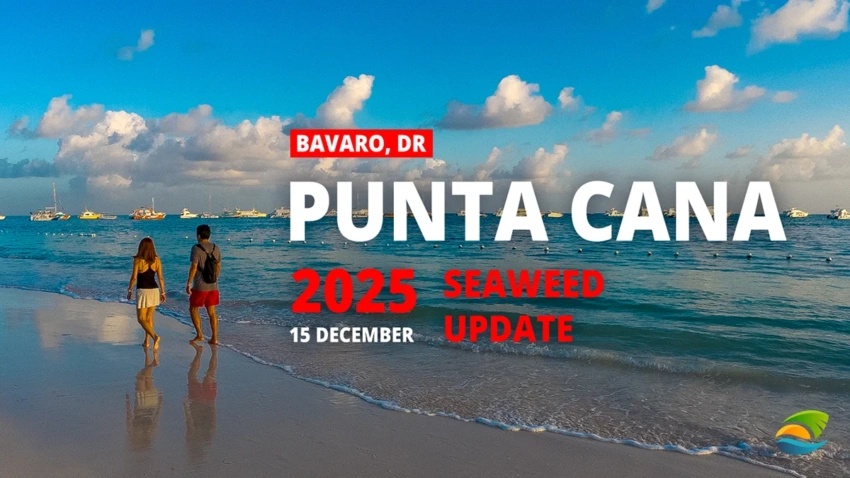
Video: Punta Cana in December
What Month is Best to Avoid Sargassum
in Punta Cana?
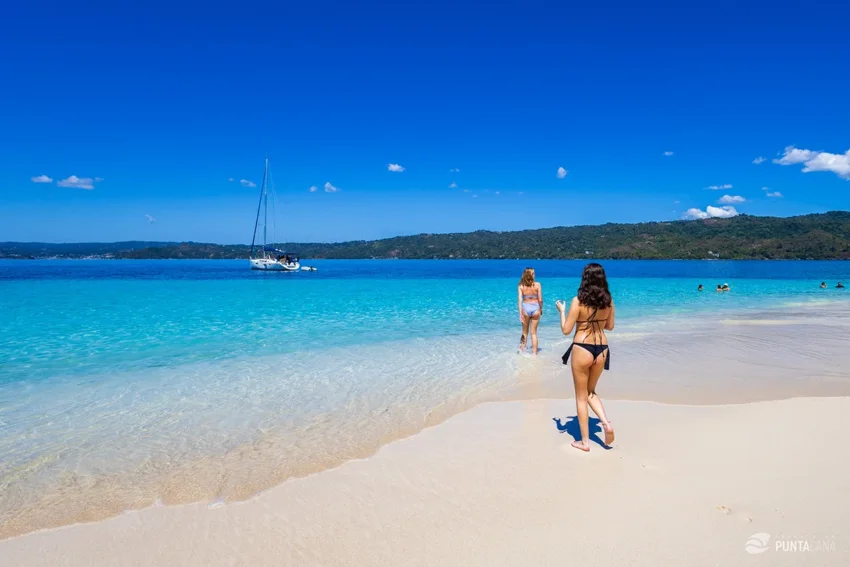
October through December are typically your safest bet for clear water. These months trend toward the seasonal minimum, and beaches often look their best after the morning rake. January can also be very nice, but aim for late fall. Roughly late October through November, you will get the highest odds of seaweed-free days.
And one more note: we also recommend considering the off-season. Prices are lower. Crowds thin out. Transfers run smoother. Guides have more time for you. It’s easier to explore at your pace. Alongside the practical perks, there is a quieter kind of beauty.
If you’re an active traveler who enjoys new experiences and unusual views, the off-season delivers them. Seaweed can even have its upsides: when a broad carpet lines the shoreline, the whole mood changes – subtler, more atmospheric.
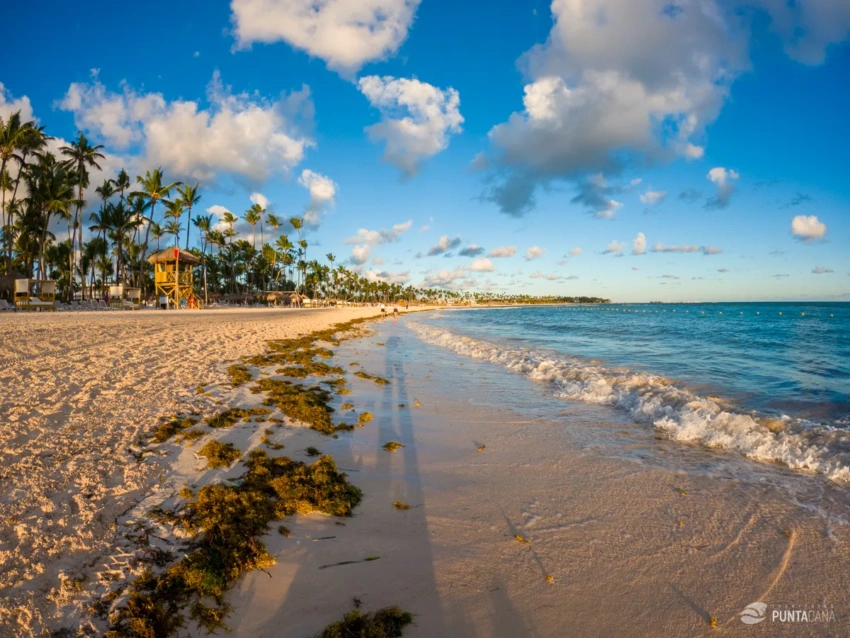
Seaweed, Punta Cana, Bavaro
How Long Does Sargassum Last in Punta Cana
During the Seaweed Season?
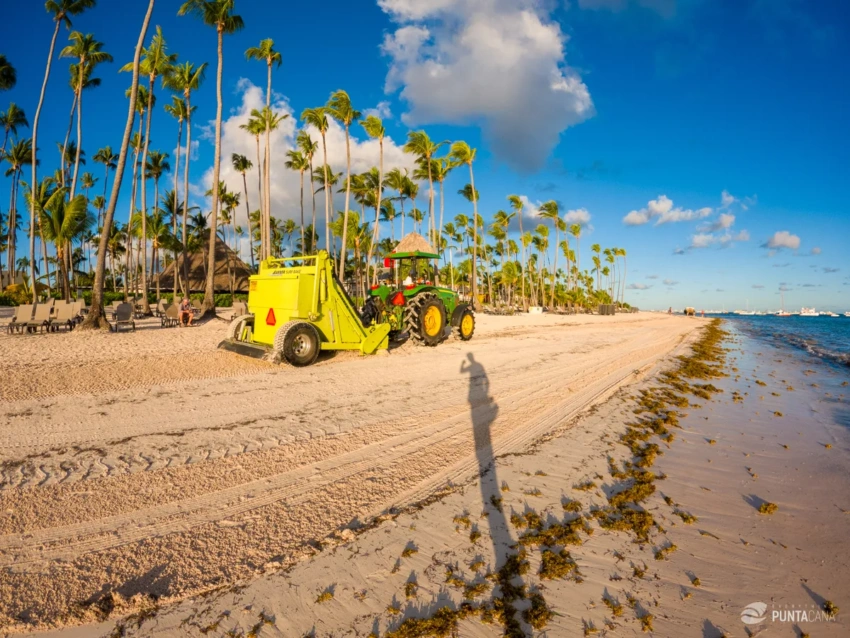
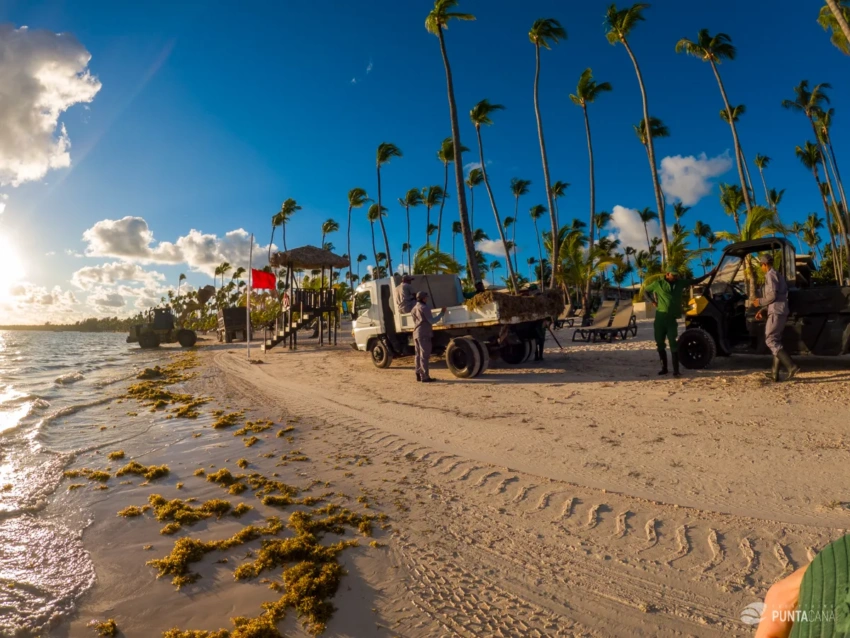
Morning Beach Cleanup
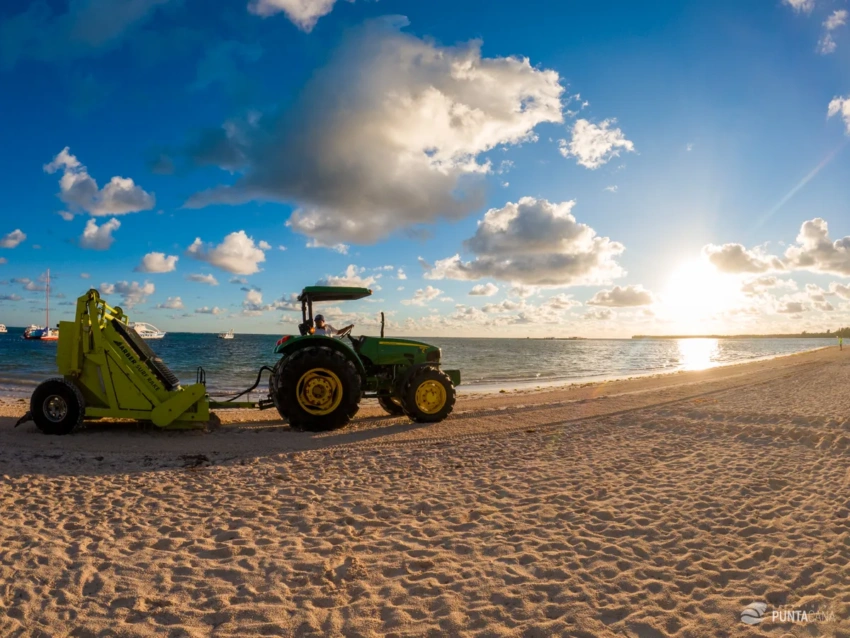
Hotels rake the main beaches every morning, so a fresh patch can disappear within 24 hours. The real issue isn’t how long sargassum lasts – it’s how suddenly it arrives. Here’s an essential point about sargassum that isn’t widely advertised – during the seaweed season, the situation can change in an instant.
Many people assume it’s a gradual buildup, with a little more seaweed each day. In reality, the opposite is often true. You can walk onto the beach one day, and everything is perfect: the water is clear, and there’s no seaweed at all. The very next morning, you can arrive to find a massive, thick carpet of it.
This happens because sargassum tends to arrive in huge “batches.” A large patch gets carried in by the surf, and then one day – boom – it’s there.
This is why, if you are traveling during that season, this really matters. You must get a truly current update. Not a report from yesterday, not the day before, not a week ago – ask someone to send you a video right now.
To be clear, this unpredictability is specific to the “seaweed season.” During the high tourist season, typically December, January, and March, they are usually not there at all.
Where to Avoid Seaweed in Punta Cana?
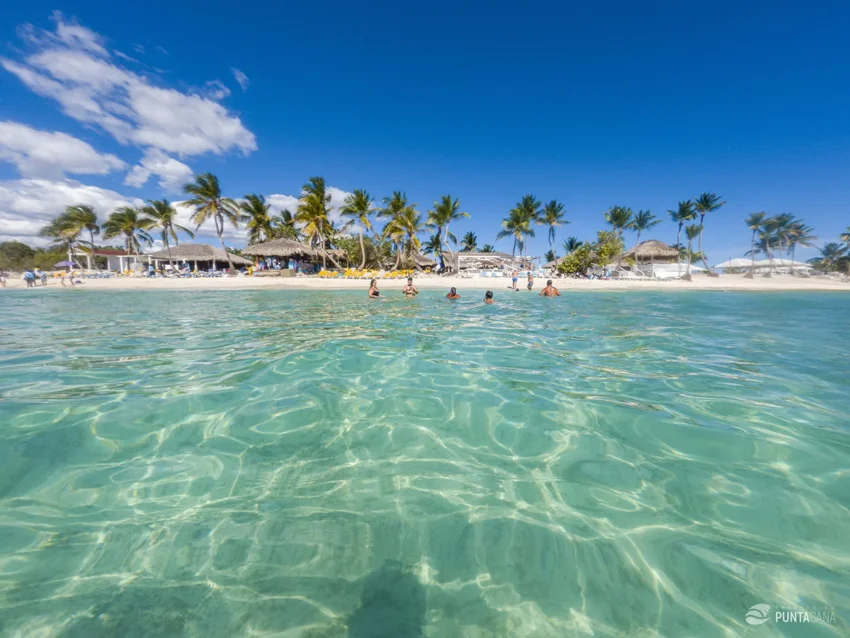
Catalina Island
There are a few places in Punta Cana where seaweed is a non-issue year-round. Saona Island, and often Catalina Island, are famously clear thanks to their west/southwest-facing shores. Visiting these specific spots is one of the surest ways to enjoy a clean, clear ocean.
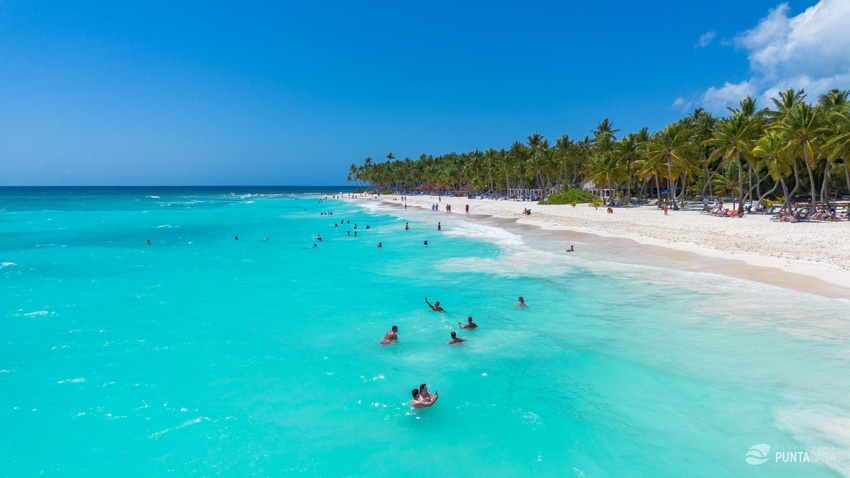
Saona Island
On Punta Cana’s Atlantic-facing strips, conditions swing day to day. So if a surprise overnight influx hits your beach, go ahead with an island excursion. The water there is typically clear. And by the time you’re back, resort crews have usually raked the shoreline.
-
Saona Island Excursion – Caribbean Paradise
from $75 View Details -
Private Isla Saona VIP Tour – Full-Day, Blue Lagoon, Snorkeling, Mangrove Forests
from $810 View Details -
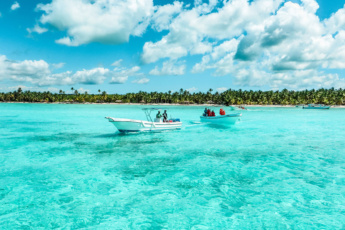
Isla Saona Boat Tour – Toro and Palmilla Beach & Natural Pool
from $149 View Details -
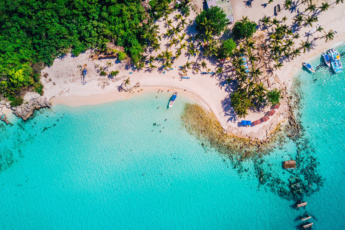
Turtle Island & Snorkeling Tour (from Punta Cana) – Catuano Channel, Cayo Ratón, Isla Saona
from $120 View Details -
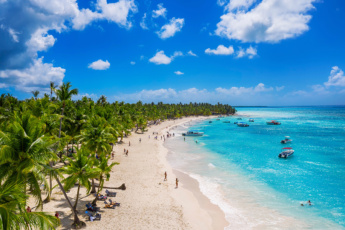
Saona Island Private Tour – From Punta Cana to Saona Excursion
from $1040 View Details -
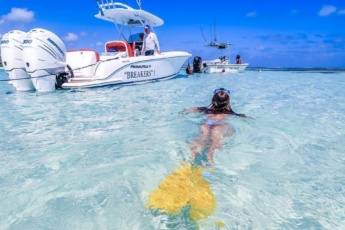
Private Speed Boat Tour from Punta Cana – Saona Island & Palmilla Beach Excursion, 2026
from $1495 View Details
However, for the main Punta Cana coastline, the situation is far more localized. This is the key point many people overlook: it all depends on your exact hotel and beach. If you’re unsure about your vacation spot, please don’t hesitate to contact us, and we’ll be happy to advise you.
The situation can vary dramatically from one stretch of sand to the next. That is why you should clarify what’s happening right now at your specific destination. Ask someone for a quick video from the beach, find a nearby live cam, or at least check a satellite view.
Not All Beaches Are Equal –
How Hotels Really Deal with Seaweed
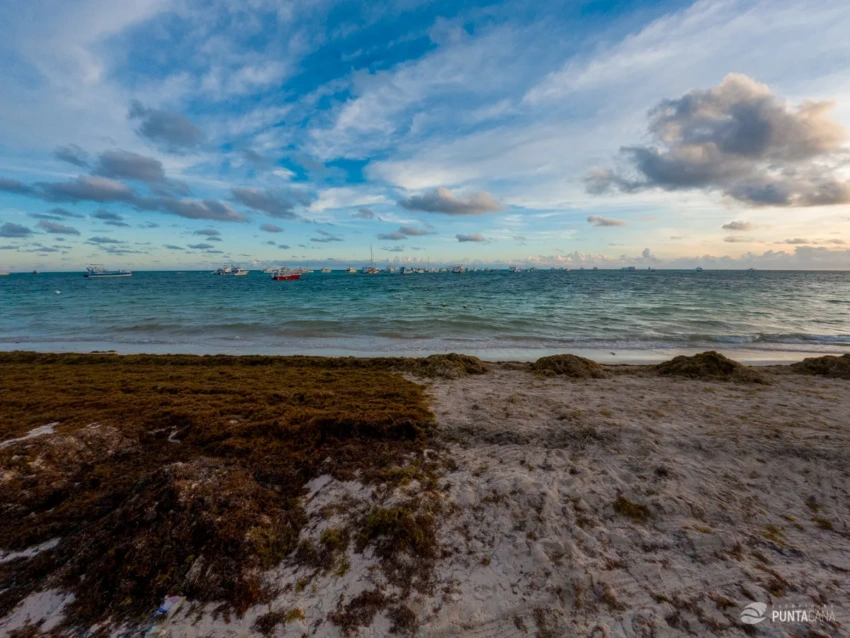
A hotel’s cleaning policy
- Top-Tier Hotels. Some resorts clean their beaches constantly, twice a day, using specialized equipment to complete the task quickly and efficiently.
- Manual Labor Hotels. Others rely only on manual labor. A crew of 15 people with pitchforks and buckets takes ages, and the result isn’t great.
- “No-Man’s Land”. Then there are “ownerless” beach sections, often where boats dock, that don’t belong to any hotel. This “nobody’s” territory is rarely cleaned, and the seaweed piles up.
This is why it’s crucial to research your specific spot. For example, even during the record-breaking 2025 year’s sargassum season, some well-managed beaches stayed virtually clear at the peak. The only trade-off was an occasional shift in water color – no seaweed in the surf, but a light, tea-brown tint. Swimming was still fine; it just wasn’t the postcard-perfect shot.
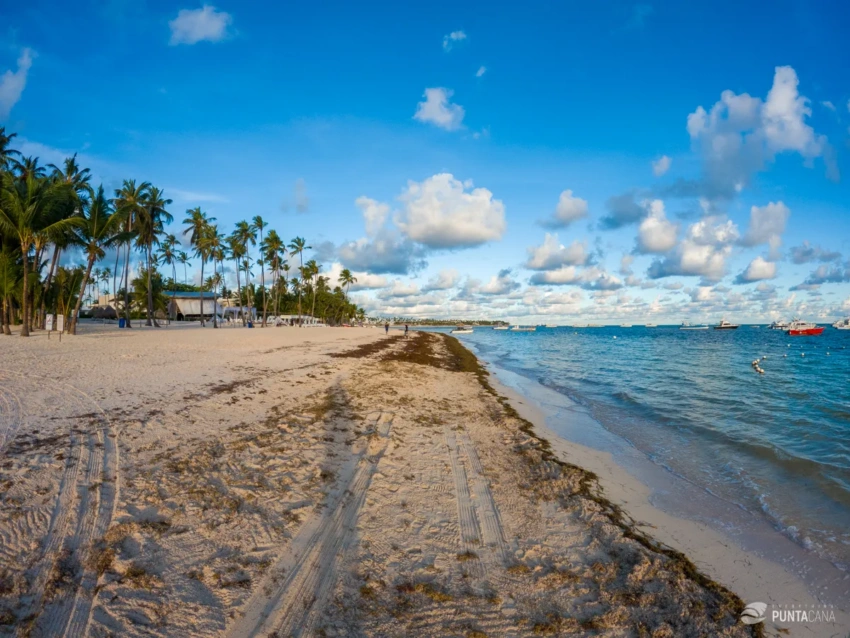
Not All Beaches Are Equal
Can You Swim in Sargassum Seaweed?
Sometimes the seaweed gets thrown onto the beach and lies there like a carpet, but there’s none in the ocean itself. In other words, nothing prevents you from swimming. The water is clear and fine; it’s just that overnight, a bit of storm tossed the seaweed onto the shore.
Here’s a subtle but critical point for swimmers: the state of the beach and the state of the water are two different things. They don’t always match.
1. Dirty beach, clean water

Dirty beach, but clean water
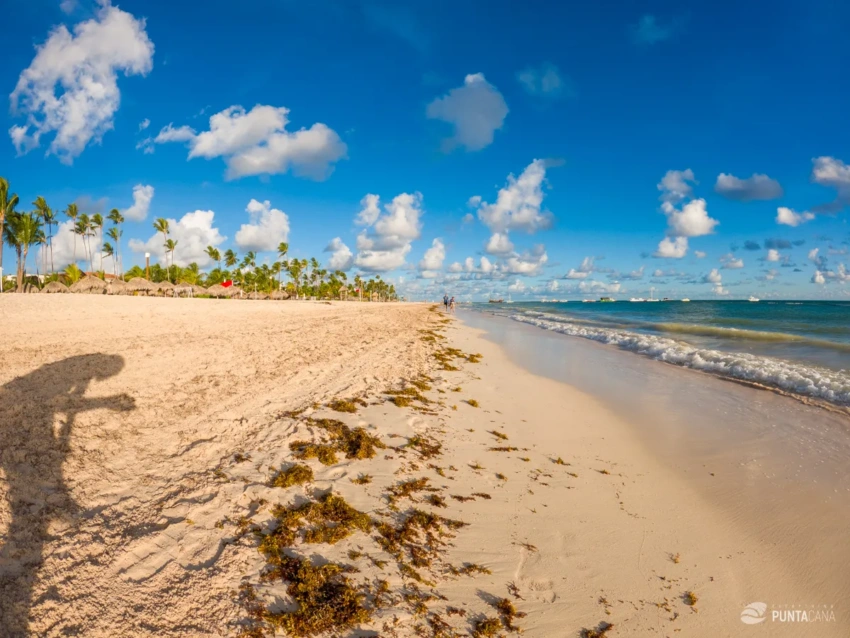
This is very common. Sometimes you’ll see photos of a two-meter-wide ribbon of seaweed covering the entire beach, making it look alarming. However, this often means that a brief overnight storm tossed the seaweed onto the shore.
In this situation, the ocean itself can be perfectly clear, acceptable, and excellent for swimming. That “carpet” on the sand? In reality, it usually gets cleaned up by hotel staff the next day, and the ocean remains swimmable the entire time.
2. Clean beach, dirty water
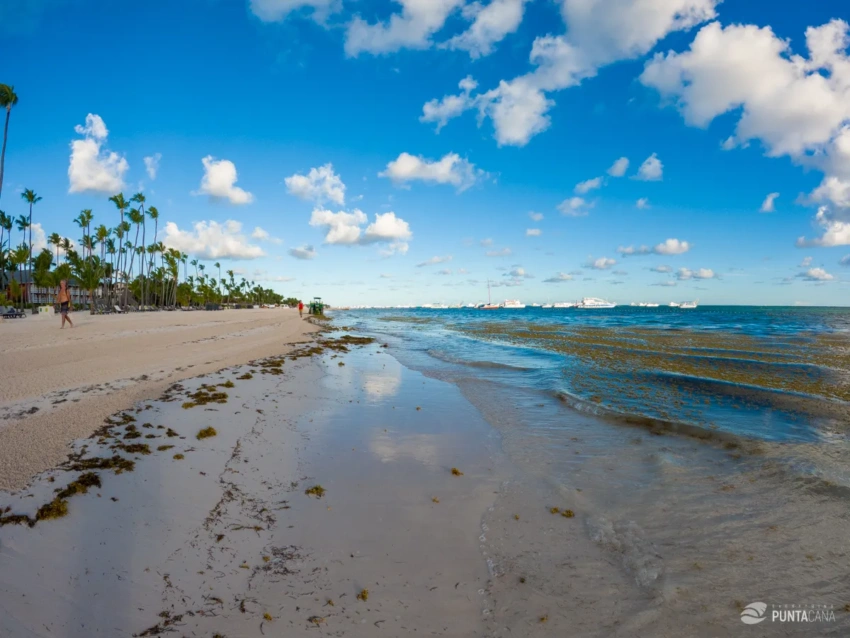
Clean beach, but dirty water
The reverse also happens. During a heavy sargassum peak, the hotel shoreline can look perfectly clean. Yet patches may still float in the water, interfering with swimming.
These nuances matter. If swimming is important to you, find a source that shows both the beach and the water. Ask for up-to-date photos, or feel free to contact us, and we’ll be happy to tell you about the current, real-time state of the water and the beach.
Don’t forget that pretty much all the big resorts in Punta Cana have excellent pools – beautiful, decorative, seriously huge, and all that. You can easily spend the whole day in the resort pools, then head to the ocean at sunrise or sunset to take in the views. In other words, swimming is basically not a problem.
Why One Punta Cana Hotel Has Seaweed
And the Next One Is Clean
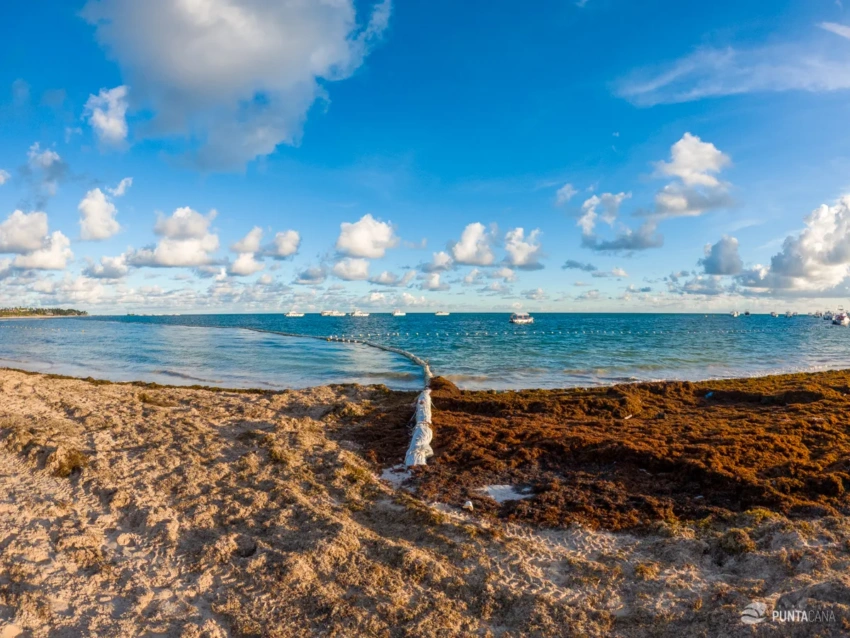
Same Coast, Different Reality
A hotel’s cleaning policy isn’t the only thing that creates such different experiences. Two other factors are just as important: the natural shape of the coastline and the specific features the hotel has (or hasn’t) installed.
On a two-kilometer stretch with two or three hotels, one hotel is all good, while another is covered in seaweed. This is because the beaches form bends and small lagoons. In some of those pockets, the very geometry of the beach makes it so that in one spot there’s none, and in another it accumulates.
Sometimes you get a really odd situation: you open a TikTok feed and people are posting photos showing everything buried in seaweed. At the same time, right next door – say, 100 meters to the left – guests at the neighboring hotel are relaxing on a clean beach. That’s also important to understand.
The role of seaweed barriers
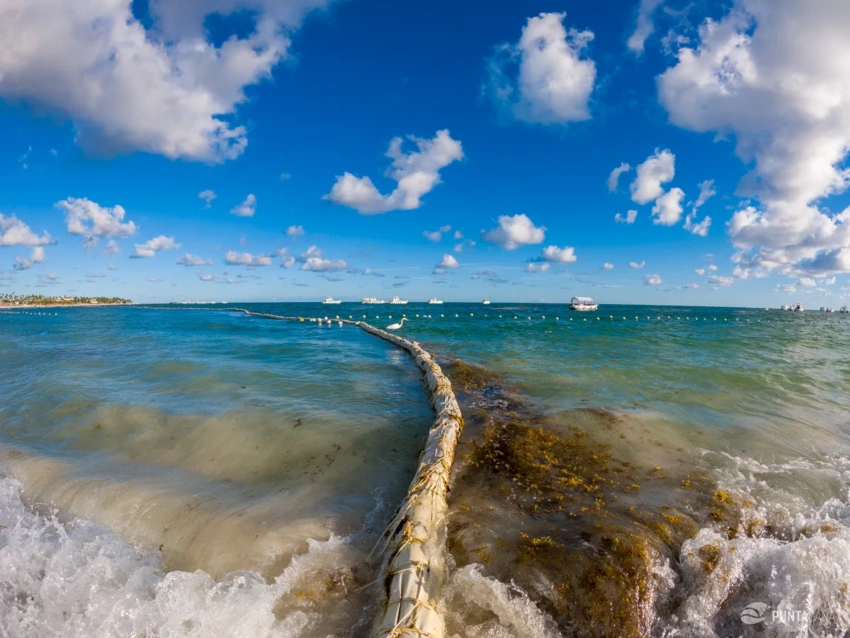
Seaweed Barrier System
Here’s another interesting point – some beaches have installed a seaweed protection system. This system is like a line of buoys, but it’s more advanced. Beyond the buoys themselves, a vertical net is present, and the buoys are also reinforced by being wrapped in a special fabric.
This creates a continuous, unified line rather than individual floats. This barrier prevents seaweed from “hopping over” the top and from slipping underneath, thanks to the net. The net simultaneously serves as a small shark barrier because it extends quite deep – about a meter and a half, almost to the bottom – running parallel to the buoys.
Some hotels have these protective barriers. As a result, when the seaweed tries to reach the shore, it just slides along these barrier lines and drifts off to other parts of the beach. So the hotel’s guests can swim.
However, this setup is far from universal; that’s the first point. The second point is that at hotels without these protective structures, the ocean itself does look more beautiful in a way. It feels more open and endless.
The Quiet Surf Effect of Seaweed
It’s a curious thing: when the seaweed settles in a dense mat, it muffles the sound of the surf. You walk along the water, and it feels like a gently rippling, shaggy rug. The usual roar is muted, and you get this unexpected sensation. It’s a fascinating feeling, really, to be by the ocean and not hear that crash. It creates a kind of stillness, a sense of intimacy. That’s the first point.
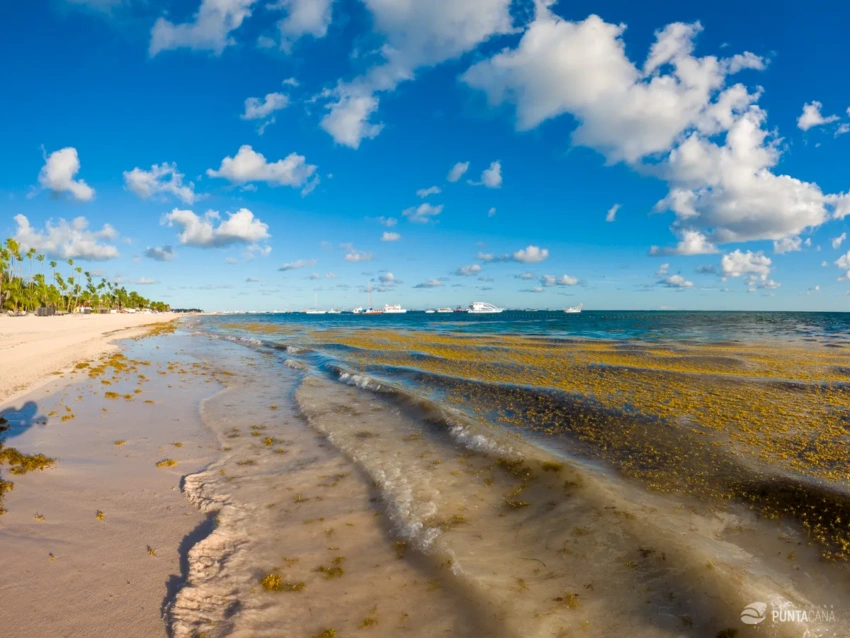
Silent Waves
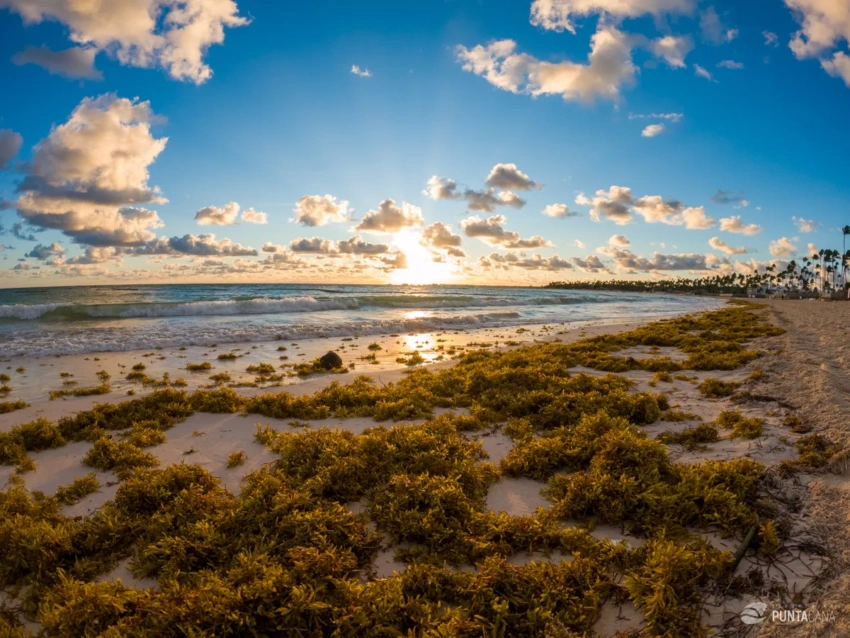
The second point is that if you go out to the ocean at, say, sunset or sunrise, you can also capture some truly striking images. This seaweed often catches the light, seeming to glow with a golden hue from the sun, and it’s honestly stunning.
So, if you want to see nature’s different facets – not just the ocean everyone is used to – then it might be worth visiting during the off-season. In the off-season, you can catch both good days for swimming and these interesting, picturesque days, just for observing all the different moods of the ocean.
Does Sargassum Seaweed Actually Smell?
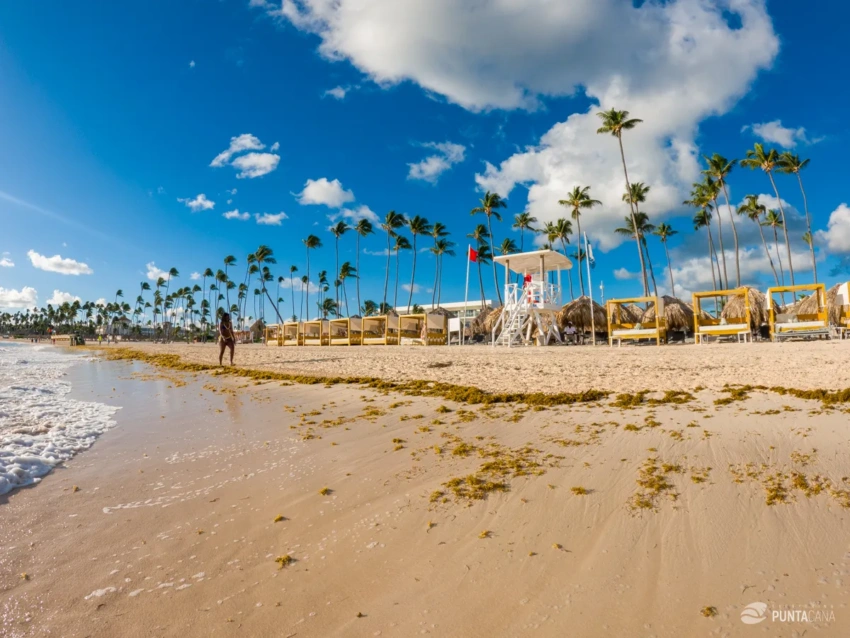
Sargassum and Odor
Here’s another key reason why it is essential to understand your exact destination and the situation there: the smell. Many people say that the sargassum gives off an unpleasant odor, but this depends entirely on how actively it is being cleaned.
- On beaches that hotels meticulously maintain, there is practically no smell from the seaweed. Even when there is a lot of it, because it doesn’t get a chance to accumulate and rot.
- However, there are sections of beaches – for example, a “no-man ‘s-land” territory with no hotel nearby. The seaweed there does pile up, begins to decompose slightly. That is when the section of the beach begins to emit an odor.
This is why it’s so important to know which hotel you are going to and if there is a situation like that nearby. Usually, if you have good, well-known, expensive hotels standing next to each other, their entire shared shoreline is cleaned well. You won’t have any problems with the smell.
Sargassum – A Problem or Big Opportunity
For the Region’s Future?
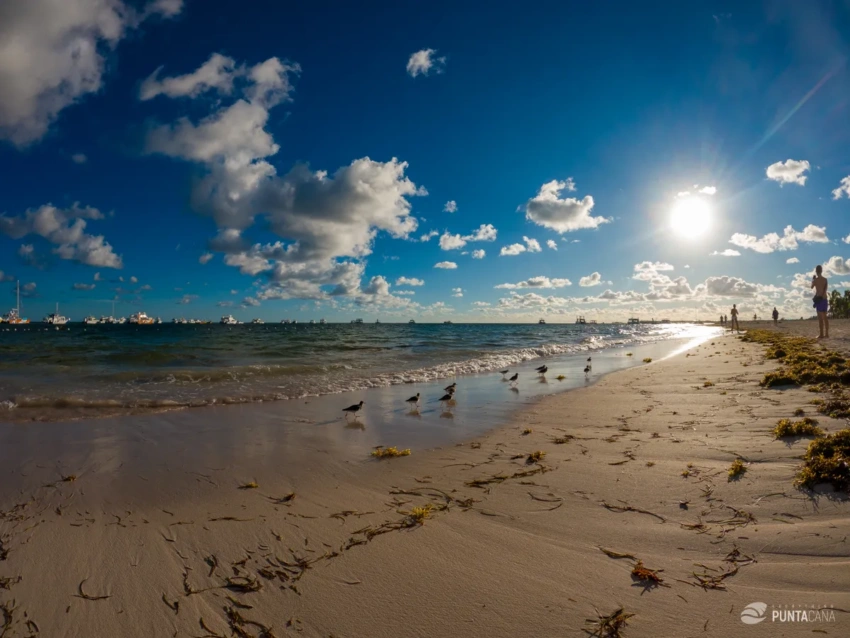
Sargassum Is a Unique and Vital Ecosystem
Sargassum is a paradox; it is simultaneously an ecological threat and an incredible resource.
- The “positive” role (in the open ocean). Far from shore, in the open sea, “islands” of sargassum are a unique and vital floating ecosystem. They serve as a “nursery” and a sanctuary for hundreds of species. For example, sea turtles (especially Loggerheads), juvenile fish (like tuna and marlin), crabs, and seabirds. In the US, these zones are designated as “Critical Habitat.”
- The “negative” role (the coastal inundation). The problem is “Sargassum Inundation Events” (SIEs). When gigantic masses of seaweed reach shore, they block the sunlight that corals and seagrass need. Their decay strips oxygen from the water, creating hypoxic/anoxic “dead zones” that kill fish, and the brown leachates released can be toxic to marine life.
The signs that you might see on the beaches in Punta Cana that say sargassum’s ‘reinforces the shoreline” are telling the truth, but they are referring to the natural, pre-2011 volumes.
In small quantities, sargassum that washes ashore decomposes, providing nutrients and becoming part of the beach, which helps build and stabilize dunes. Today’s problem is “too much of a good thing.”
What is already being done with sargassum?
urning Seaweed into Value
While sargassum is a challenge, it’s also a raw material. Pilot projects and small-scale operations are already underway across the Caribbean and Mexico, turning the seaweed into valuable products:
- Compost and Bio-fertilizers. This is one of the most common uses. For example, the Club Med Michès project in the Dominican Republic, along with its partners, has processed thousands of tons of sargassum into compost for local farmers.
- Bioenergy (Biogas/Biofuel). This avenue is considered one of the safest and most scalable methods of disposal, often employing processes such as anaerobic digestion. There have been reports of plants launching in Quintana Roo (Mexico) to convert sargassum into both biogas and fertilizer. Fresh research is also exploring the use of sargassum ensilage (fermenting it like silage) to produce methane.
- “Green Chemistry” and Materials. This is a rapidly growing field. Innovators are turning sargassum into construction materials (panels, blocks), eco-friendly packaging, cosmetic ingredients (like alginate and fucoidan), experimental “vegan leather”, and textiles.
Can we eat the seaweed arriving in the Caribbean?
Sargassum Is Unsafe for Food Use
It is not safe to eat the sargassum that washes up in the Caribbean because it absorbs high levels of heavy metals, such as arsenic and cadmium, like a sponge. Due to these contamination risks, regulators advise against using sargassum for human consumption or animal feed. They recommend focusing on non-food uses such as energy and materials.
The Plans for Large-scale Seaweed Processing
Seaweed processing plans are now the primary focus for the entire Caribbean basin. In recent years (especially 2024-2025), major international conferences (like the 3rd EU-Caribbean Global Gateway Conference) have been dedicated to this.
Creating a Sargassum Value Chain
The aim now is to transition from studies and pilots to execution and build complete sargassum value chains, as in the coconut industry. The husk (coir) is processed and utilized for a wide range of applications, from mattresses to plant substrates.
The goal is to create an infrastructure that will collect sargassum (ideally at sea, before it hits the beach) and provide a stable supply to processing plants to be turned into:
- Bio-fertilizers and growth stimulants (startups like Carbonwave in Mexico and Puerto Rico are already doing this).
- Construction materials (the startup Sargassum Eco Lumber is already producing “eco-lumber” and panels).
- Bioplastics and packaging (the company Notpla uses seaweed to create biodegradable coatings for packaging).
- Bioenergy (biogas).
Why Was Sargassum So Bad in 2025?
The Science Behind the 2025 Sargassum Bloom
Giant accumulations of brown seaweed, known as the Great Atlantic Sargassum Belt, have grown to record sizes. By the middle of this summer, about 38 million tons of Sargassum had washed ashore across the Caribbean, the Gulf of Mexico, and northern South America. It was a new record.
As is well known, this brown seaweed originates from the Sargasso Sea, located east of the Florida coast. Since 2011, scientists have repeatedly recorded the formation of the Great Atlantic Sargassum Belt, driven by the prevailing easterly winds.
Until recently, the sources of the phosphorus and nitrogen fueling this rapid growth were not fully understood. Scientists previously believed the leading cause was nutrient runoff from agricultural lands or the deforestation of tropical rainforests. However, alas, these factors alone are insufficient to explain the sharp spike in seaweed biomass in recent years.
In a new study, a team from the Max Planck Institute for Chemistry has identified the primary mechanism behind these massive blooms, as well as the climatic conditions that fuel them.
A new study published in Nature Geoscience explains that the key mechanism is upwelling near the equator. Strong winds pull cold, phosphorus-rich water up from the deep ocean to the surface, where it then travels north.
This creates a chain reaction. Excess phosphorus creates ideal conditions for cyanobacteria that live in symbiosis with Sargassum. These tiny organisms possess a unique ability: they can “fix” atmospheric nitrogen, converting it into a form the seaweed can use.
It is precisely this extra boost of nitrogen that gives Sargassum a significant competitive advantage over other algae, fueling the explosive growth we are now witnessing.
Scientists confirmed this mechanism by analyzing coral annual layers. Much like tree rings, corals record the ocean’s chemical history. The researchers found a direct correlation: periods of high nitrogen fixation matched the spikes in seaweed biomass, a pattern that became unmistakable after 2011.
The Conclusion
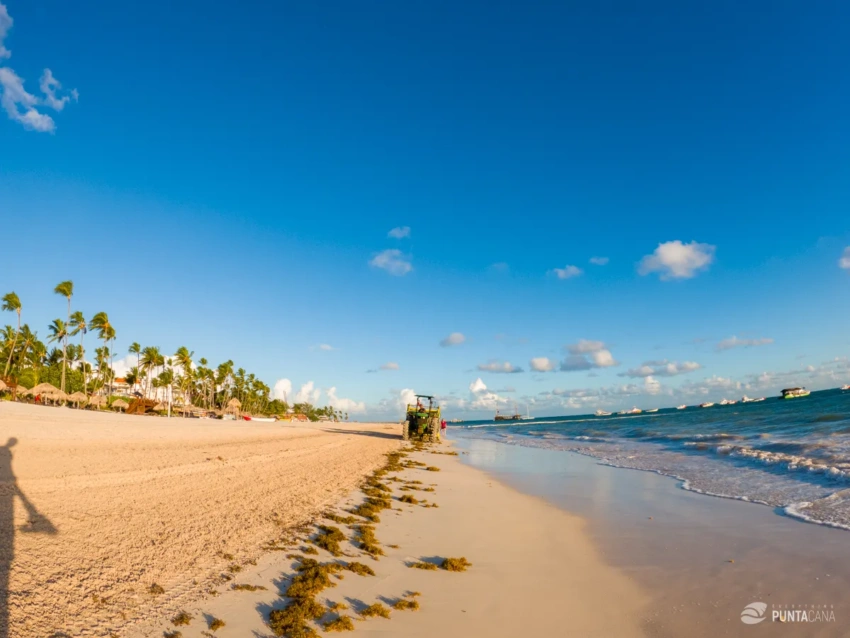
Bavaro Beach, Punta Cana
Punta Cana is still an easy yes – you just need to plan with the season in mind. If long swim days are your priority, aim for late fall into early winter. Late October to December, with January often being a good time. The beaches tend to be clearer, and morning rakes leave the shoreline looking its best.
During seaweed season, remember that it arrives in pulses. One night can change the picture, which is why a quick, current check is crucial. See our weekly beach walk-throughs on YouTube for real-time visuals. If your stretch gets an overnight hit, pivot to an island day: Saona (often Catalina, too) is usually clear, and by the time you’re back, resort crews have typically cleaned the sand.
Location and management make all the difference. Atlantic-facing bays can vary significantly from one hotel to another, depending on the shoreline shape, cleanup routines, and whether a property has practical seaweed barriers. Bayahibe’s side stays reliably clean most of the year, and nearly all major resorts offer excellent pools. So, a pool-first morning and an ocean sunset are an excellent pairing.
So don’t let sargassum dominate the decision. Pick your timing, verify your exact beach, and keep an island excursion in your pocket. Enjoy the lighter crowds and smoother logistics that come with shoulder or off-season travel. Done this way, Punta Cana delivers precisely what you came for.
Frequently Asked Questions About
Seaweed in Punta Cana
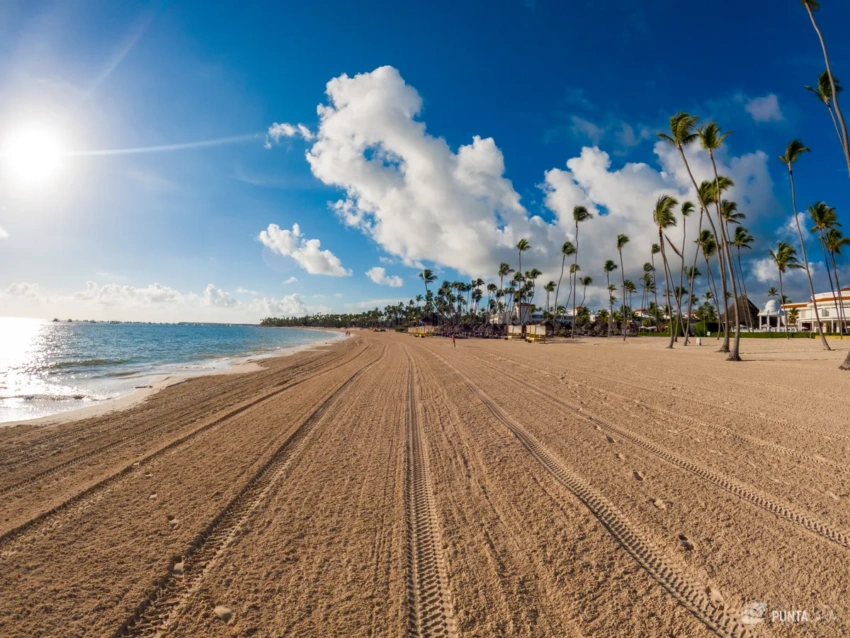
Paradisus Palma Real Resort, Punta Cana
What time of the year is there a lot of algae?
Late spring through summer, with the highest risk in June-August. It still varies day to day, but those months see the most frequent “pulses.”
Does Punta Cana get a lot of seaweed?
At times, yes – especially on Atlantic-facing beaches in season. Resorts usually rake in the mornings, so conditions often look better by late morning.
Are there any beaches in Punta Cana without seaweed?
Your best bets are the Bayahibe side and island days to Saona (often Catalina) – they’re west/southwest-facing and are usually clear year-round.
What months does sargassum hit Punta Cana?
It can appear as early as February/March and run through late summer, peaking June-August. The clearest stretch is typically October-December.
What are bad months to go to Punta Cana?
If you want the lowest seaweed odds, avoid June-August. For the best chance of clear water, aim for late October-December (January is often good too).
What is sargassum used for?
It is already being used to make compost, bio-fertilizers, biogas, packaging, building panels, and cosmetic ingredients. Eating the sargassum that washes up in the Caribbean is not recommended due to the high risk of contamination. Using it for energy and materials is a much more sensible path forward.
Updated on: . Author: